If you’re running an agency and it feels like every month is a scramble to stay afloat — you’re not alone. Not enough time. Not enough money. Not enough clients. And somehow, still too much stress.
I’ve coached a lot of agency owners. I hear the same things again and again:
“There have to be easier ways to make money.”
“I made more money as a freelancer.”
“Why does it have to be this hard.”
It’s not just you. Most agencies are built to survive — not to grow. And that’s a problem.
The truth?
What feels right when you’re building an agency is often exactly what keeps you small.
It’s not that you’re making bad decisions. It’s that you’re using decision-making frameworks designed for survival. They’re good at keeping your head above water, but they won’t get you to the shore.
If you’re stuck in this cycle, it’s not your fault — but it is your responsibility to break it.
That’s what we’re going to talk about.
On May 14th, 2025, I’ll be joining the team at Parallax for a live, discussion-based session called “Escaping Agency Survival Mode.” We’re going to dig into the traps agency owners fall into, why they’re so hard to see when you’re in them, and how to start making decisions that actually move you forward.
If you missed it, you can still catch the recording!
Feeling overwhelmed trying to manage your team’s workload or allocate resources effectively? You’re not alone. If you’ve spent way too much time lost in spreadsheets or wrangling PTO calendars, welcome. This is your guide to resourcing that’s less painful, more effective, and (hopefully) a lot less boring.
By the end of this blog, you’ll have a resourcing game plan that keeps things moving and your sanity (mostly) intact. Plus, a few laughs. Because if you’re not laughing, you might be crying into your project timeline.
Psst, want a shortcut? Book a demo of Parallax’s resource management software and see how you can make resource planning easier.
What Is Resourcing?
First, a quick reality check. Resourcing isn’t just “who’s doing what” (though that’s part of it). It’s the gentle art/science of making sure people, tech, budget, and, sometimes, a dash of hope, are all in the right place for your business to actually make stuff happen.
Done well, resourcing keeps productivity high and turnover low. People are working on things they’re good at, deadlines are getting met, and you don’t have to explain to your boss (again) why the project is running late. It’s your best weapon against chaos, burnout, and expense reports that make your eyes water.
Resourcing vs. Recruiting (It’s Not a Trick Question)
This gets confusing, so listen up. Resourcing = maximizing what you already have. Recruiting = hunting down new humans for your team.
Scenario time:
Your project desperately needs graphic design skills. Do you…
A) Rejig who’s doing what and send your marketing whiz to a Canva bootcamp? (Resourcing)
B) Hire a new full-time unicorn who knows Illustrator, After Effects, and probably how to code your website while you sleep? (Recruiting)
Start with resourcing. Save recruiting for when you’ve squeezed every drop out of your current talent (not literally, HR gets twitchy about that).
Pro tip: Resourcing smarter is way less stressful with a dynamic platform like Parallax. You didn’t get into this job to become an Excel wizard, right? [link]
Why Is a Resourcing Strategy Important?
A resourcing strategy is the difference between “organized productivity” and “everyone sprinting in different directions with their hair on fire.”
With a strategy:
You know who’s free, who’s swamped, and who’s quietly quitting via Slack status updates.
Projects move forward, deadlines don’t sneak up like jump-scares, and nobody’s putting in surprise overtime… again.
Without a strategy:
You get missed deadlines, surprising budget overruns, and late-night emails that read, “Hey, can you actually handle three major projects this week?”
Treat your resourcing strategy as your GPS. It keeps you from wandering into the productivity wilderness (no cell service, no snacks).
The Essentials of a Resourcing Strategy
A decent resourcing strategy should include these five things:
1. Workforce Planning
Line up people’s actual skills and capacity with real project needs. Not just “who’s technically available.” Actual fit.
2. Skill Gap Analysis
Find out what you’re missing before it derails everything. Spoiler alert: You always notice the missing skill the week before a big deadline.
3. Technology Integration
How many tabs can one manager open before losing their mind? Streamline your world. Use proper tools to allocate, monitor, and forecast resources.
4. Performance Tracking
Are resources being used efficiently or is Tom in Sales “collaborating” by looking at memes? Monitor, adjust, repeat.
5. Flexibility
Because despite your best plans, the universe likes chaos. Staff get sick, goals change, clients move the finish line. Build in some give.
Want the full checklist (without scribbling in the margins)? Download it here [link].
How To Create a Resourcing Strategy in 10 Steps
You don’t have to be a genius or a fortune teller. Here’s how to make your own strategy, even if your last one felt more like wishful thinking.
1. Define Business Goals First
What’s the big picture? Are you expanding, pausing, or pivoting? Get clear on goals so your resources flow to what matters most.
2. Assess Your Current Resources
Know what you actually have to work with. People. Skills. Budget. Tech. Doing an honest audit now saves you from phantom resource syndrome later.
3. Identify Skill Gaps
Fact of life: No team is perfect. Figure out which skills are MIA. Upskill, cross-train, or temporarily reassign. Not gonna happen? This might be a sign to do some strategic hiring.
4. Set Project Priorities and Deadlines
Deadlines can be a source of stress, but they also help keep projects on track. Be realistic when setting deadlines, taking into account the complexity of the project and any potential roadblocks that may arise. Don’t be afraid to adjust deadlines if necessary, as long as you communicate changes with your team and stakeholders.
5. Delegate Effectively
As much as we might like to think otherwise, there’s only so much one person can do in a day. Effective delegation is key to managing multiple projects at once. Identify tasks that can be delegated to other team members. Don’t forget to cross-reference your capacity plan!
6. Take Breaks
It may seem counterintuitive when you have so much on your plate, but taking breaks is crucial for managing multiple projects effectively. Regular breaks allow you to recharge and come back with fresh eyes, helping you stay focused and productive.
5. Match Resources to Needs
Ever seen your most talented developer stuck doing busywork? Ouch. Assign the best people to the highest-stakes projects.
6. Use Data to Forecast Demand
History repeats. Use past project data and project forecasts to estimate what skills and people you’ll need next quarter, so you’re not always playing catch-up.
7. Build in Flexibility
Reality check: Nothing goes 100% to plan. Ensure your strategy bends, not breaks. Keep some slack in the line and adjust as reality throws curveballs.
8. Leverage Technology
Manual tracking is so 2005. Switching to resource management software (hello, Parallax) means real-time updates, workload visibility, and fewer “Do you have five minutes?” calls.
9. Monitor Utilization
Overworked team = burnout. Track who’s at capacity, who’s chilling, and reallocate as needed.
10. Adjust, Repeat, Survive
Review how it’s going, look at the KPIs, and update your strategy. Optimize and keep it fresh.
Key KPIs Every Resource Manager Actually Cares About
Congrats! You’ve built a resourcing strategy. Now you have to… actually see if it’s working.
Resource Utilization Rate (and Why It’s the Real MVP)
This number tells you what % of time your people spend on billable or strategic work. Too high? Burnout city. Too low? They’re updating their fantasy league and reorganizing their pens.
Smart teams use utilization rates to keep things balanced, predictable, and… tolerable.
Are you finishing projects on time, using only the resources you planned? Or is every project an over-budget, over-timeline spectacle? High completion rate = your team, projects, and budget are actually aligned.
Track KPIs Like a Pro with Resource Management Software
You can survive with spreadsheets. But why suffer? Resource management tools (Parallax, for example) show you everything from forecasting to project health at a glance. Skip the endless updates. Get stress-free reporting.
Look for features like:
Real-time capacity snapshots
Easy project allocation
Integration with your favorite tools (nobody likes double-entry)
Simplify your resourcing life. Book a demo of Parallax now [link].
Next Steps for Smarter Resourcing
You’re now armed with the knowledge of how to build (and use) a resourcing strategy that works. Here’s what to do:
Audit your current setup. What’s working? What’s not so much?
Map your team’s real skills and workloads.
Set up a strategy and track a few core KPIs.
Test, iterate, and don’t forget to breathe.
And if you want less chaos and fewer headaches, check out how Parallax makes resource management not only survivable but almost fun.
Looking to cut costs, boost profits, and make your business run a little smoother? Operational efficiency might just be the secret ingredient you’re missing. It’s all about making sure your team’s efforts aren’t going to waste because nobody likes running in place.
CEOs, operations leaders, and project managers, this one’s for you. We’re breaking down what operational efficiency actually means, how to measure it (without the headache), and how to make meaningful improvements to your organization’s operations.
Operational efficiency is about getting the best possible results with the least amount of wasted time, effort, and resources. Businesses that master operational efficiency deliver high-quality work faster, with fewer roadblocks, and at a lower cost. When done right, it means smoother workflows, engaged teams, and a healthier bottom line.
Companies across industries strive for operational efficiency by optimizing processes, automating repetitive tasks, and making smarter resource allocation decisions. The goal isn’t to squeeze every last drop of productivity out of people. It’s to create a system where work flows smoothly, bottlenecks disappear, and no one is spending hours wrestling with clunky processes or redundant tasks.
Operational Efficiency Examples
The most efficient businesses don’t just work faster, they work smarter. Here’s how companies create better operational flow:
Smarter Resource Allocation: Companies use resource planning tools like Parallax to ensure the right people are working on the right projects at the right time, reducing downtime and maximizing productivity.
Process Automation: Automating repetitive tasks, like time tracking or financial reporting, frees up teams to focus on high-value work instead of getting bogged down in admin tasks.
Data-Driven Decision-Making: Businesses that track utilization rates, planned vs. actuals, and financial performance can identify inefficiencies early and make informed changes to improve operations.
How To Measure Operational Efficiency
Tracking the right metrics is essential to understanding where your business stands and where there’s room for improvement. Here are three ways to measure efficiency effectively:
Track Key Performance Indicators (KPIs)
KPIs offer a snapshot of how efficiently your business is running. Metrics like utilization rates, planned vs. actuals (budget, hours, margin), overall margins, and customer retention help businesses identify trends, spot inefficiencies, and make data-driven decisions. Regularly reviewing these numbers keeps teams aligned and operations optimized.
Analyze Resource Utilization
Efficient businesses know exactly how their resources, people, tools, and budgets are being used. By tracking team utilization rates, project allocation, and planned vs. actual resource usage, companies can optimize employee workloads and ensure every resource is used effectively. Tools like Parallax provide real-time insights to help leaders make smarter allocation decisions by breaking down utilization and planned capacity by role, team, and organization!
Evaluate Process Speed Versus Output Quality
Faster isn’t always better. Operational efficiency is about delivering quality work at the right pace. If a business prioritizes speed over quality, mistakes pile up, leading to costly rework. The most efficient companies strike a balance, optimizing workflows while maintaining top-notch results.
How To Improve Operational Efficiency
Once you’ve measured where you stand, it’s time to take action. Here are three proven strategies to enhance efficiency without cutting corners.
Optimize Workflows For Better Productivity
Bottlenecks kill efficiency. Streamlining workflows, through automation, lean management, or better project planning helps eliminate unnecessary steps and reduces wasted time. Whether it’s automating routine tasks or implementing better resource management habits, refining processes keeps teams focused on high-impact work.
Use Capacity Planning To Balance Workloads
Too much work leads to burnout. Too little leads to inefficiencies. Capacity planning ensures that workloads are distributed evenly, optimizing productivity while keeping employees engaged. Forecasting demand with tools like Parallax helps businesses avoid last-minute resourcing chaos and keeps projects running smoothly.
Enhance Employee Skills With Targeted Training
A skilled team is an efficient team. Investing in ongoing training, whether it’s upscaling on new technologies or refining time management techniques, pays off in the long run. When employees have the right knowledge and tools, they work more efficiently, make fewer mistakes, and are overall more engaged in their role and company.
Make It Easier with Parallax
Parallax helps firms improve efficiency by providing real-time insights into resource allocation, forecasting demand, and ensuring teams are always working at peak performance. Want to see it in action? Book a demo here.
Ever feel like you’re throwing shots in the dark when it comes to project planning? Guessing how long projects will take your team, what it will cost, and what staffing will look like, only to get half way through delivery to realize your over budget and behind on deadlines? You’re not alone. Project forecasting is a practice that helps professional service organizations accurately predict time, cost, and how you resource projects to complete them successfully.
What Is Project Forecasting In Project Management?
Project forecasting is like having a project GPS. It helps predict where you’re going, how long it’ll take, and what it’ll cost based on where you’ve been (i.e., historical data) and where you are now (current trends). Project forecasts use past project insights like timelines, budgets, and team performance to make informed predictions about future projects.
Accurate forecasting isn’t just a nice-to-have; it’s a critical tool for better decision-making. It guides resource management, budget planning, and even helps identify which projects are worth pursuing. Imagine knowing in advance if a project is likely to go over budget or miss deadlines. That’s the power of forecasting.
Duration
Estimating how long a project will take is a classic project management puzzle. Project forecasting helps crack that code by analyzing past project data. By reviewing timelines from similar projects and understanding how long specific tasks took, you can make educated guesses about your current project’s duration.
This isn’t just about calendar math. Accurate duration forecasts help ensure your teams have available capacity, preventing those dreaded last-minute scrambles, and ensuring you have resources available for smoother project execution.
Forecasting also helps identify potential bottlenecks or dependencies that could delay progress like upcoming vacation time or a contract employee’s start date for example. By highlighting these areas early, project managers can adjust schedules, reallocate resources, or implement contingency plans to keep projects on track.
Cost
Budget overruns: the nightmare of every project manager. Project forecasting steps in as your financial safety net. By analyzing historical cost data and current resource rates, you can predict project expenses with much greater accuracy.
This foresight helps set realistic budget expectations, align financial goals with project plans, and avoid unpleasant surprises down the road.
Forecasting also supports better financial decision-making by providing insights into cost trends, helping managers anticipate fluctuations in project costs, identify savings opportunities, and ensure funds are allocated efficiently throughout the project lifecycle.
Quality
High-quality project outcomes don’t happen by accident. Project forecasting helps maintain quality standards by identifying potential risks early and ensuring you’ve got the right people with the right skills on board.
Forecasting quality risks involves analyzing historical data from previous projects to identify patterns where quality issues occurred. This can include delays in task completion, budget overruns, or resource shortages that lead to rushed work. By spotting these trends, project managers can proactively implement mitigation strategies, such as allocating additional resources, adjusting timelines, or scheduling quality checks at critical project stages.
Additionally, forecasting helps in resource planning by ensuring the right mix of skills and experience is assigned to each phase of the project. This minimizes the risk of errors or substandard work due to skill gaps. It’s like having a quality radar, helping you detect and address potential problems before they affect project outcomes.
When Should Project Forecasting Take Place?
Project forecasting isn’t a one-and-done deal. It should happen at key stages:
Initial Planning: Forecasting during this phase helps set realistic expectations for time, cost, and resources.
Project Execution: Ongoing forecasting allows you to adjust plans based on actual performance, new risks, or scope changes.
Continuous forecasting keeps your project adaptable and aligned with goals, even when surprises pop up (and they always do).
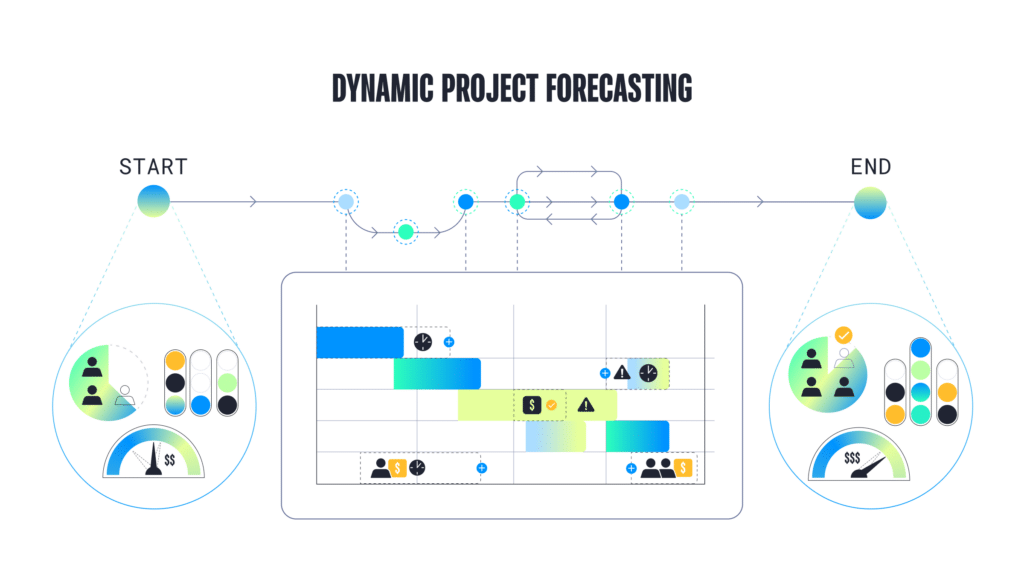
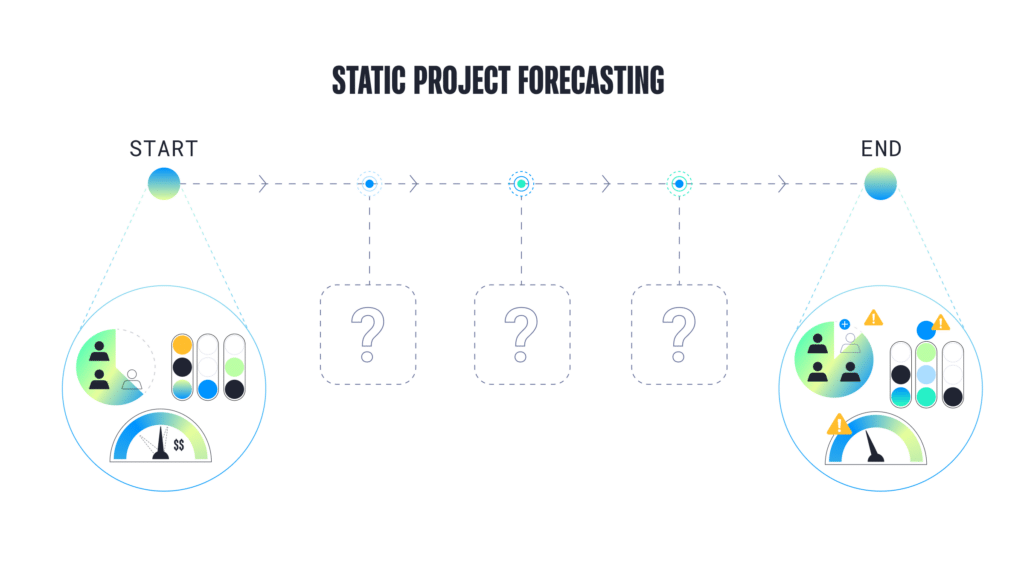
Traditional forecasting methods often rely on static data—snapshots of what was true at the start of a project. While useful for setting initial expectations, these methods fall short when projects encounter inevitable changes like shifting deadlines, fluctuating resource availability, or evolving client demands.
Dynamic, real-time forecasting is an adaptive approach to project forecasting that continuously updates projections based on live data from your projects. Unlike traditional forecasting methods, which often rely on static plans created at the start of a project, dynamic forecasting evolves as new information becomes available, ensuring your estimates for time, cost, resources, and project outcomes remain accurate and relevant throughout the project lifecycle.
The Benefits of Real-Time, Continuous Forecasting
Increased Accuracy: Real-time forecasting adjusts as new data comes in. This means your forecasts are always current, reducing the risk of decisions based on outdated information.
Proactive Risk Management: Continuous forecasting allows you to identify risks early and make timely adjustments. Instead of reacting to issues after they occur, you can anticipate and mitigate them before they impact your project.
Better Resource Utilization: Dynamic forecasting provides a clear view of resource availability, enabling more effective allocation and helps inform capacity planning efforts. This prevents burnout, and ensures the right people are working on the right tasks at the right time.
Enhanced Financial Control: By regularly updating cost forecasts, you can catch budget overruns before they escalate. This helps maintain profitability and supports smarter financial planning throughout the project lifecycle.
Greater Flexibility: Projects rarely go exactly as planned. Real-time forecasting allows for quick pivots, helping teams adapt to changes without derailing timelines or goals.
Static forecasting might give you a baseline, but it doesn’t account for the dynamic nature of most projects. Real-time forecasting, on the other hand, transforms forecasting from a one-time event into an ongoing process. It reduces the risk of missed deadlines, budget overruns, and resource bottlenecks because potential issues are identified and addressed before they become critical. This leads to more predictable outcomes, better resource allocation, and increased project success rates.
How To Project Forecast
Ready to create your own project forecast? Here’s how:
Gather Historical Data: Collect data from past projects, including timelines, budgets, resource allocations, and outcomes.
Define Project Scope: Clearly outline what the project entails to set accurate parameters for forecasting.
Select a Forecasting Method: Choose a methodology that fits your project’s complexity and needs.
Analyze the Data: Identify trends, patterns, and potential risks based on historical insights.
Adjust and Update Regularly: As the project progresses, revisit and refine your forecasts to reflect real-time changes.
See Parallax’s Resource Management Software
Project forecasting doesn’t have to be a guessing game. With the right tools, you can predict timelines, control costs, and ensure top-notch quality all while keeping your team aligned and your stakeholders happy.
Parallax’s resource management software takes the heavy lifting out of forecasting. It integrates historical data, real-time project metrics, and resource insights to help you plan with confidence.
Running an agency often feels like a balancing act—keeping clients happy, maintaining profitability, and ensuring your team stays engaged, all at the same time. Many leaders believe they have to choose between running an efficient business and creating a great place to work. But in reality, these two goals go hand in hand.
A well-structured agency creates a better work environment, and an engaged team delivers better business results. The challenge? Too many agencies rely on gut feelings rather than data, leading to firefighting, burnout, and unpredictable workloads that keeps orgs stuck in survival mode.
So how do you know if you’re approaching this “survival spiral” and how can you escape?
Some agencies unknowingly trap themselves in a cycle where work is overwhelming, profits are shrinking, and employees are heading for the exit. If this sounds familiar, you might be stuck in the Services Spiral of Death—which, yes, sounds dramatic, but for agency leaders trying to make payroll while keeping clients happy, it can feel all too real.
Signs Your Agency is Stuck in Survival Mode
Compressed Margins – Costs keep rising, but pricing hasn’t kept pace, eating into profits.
Stagnant Revenue – New business isn’t coming in fast enough, and existing projects aren’t generating enough value.
High Employee Turnover – Your best people are leaving, and those who stay are burning out.
A Reactive Culture – Instead of proactively managing workloads, leadership is constantly putting out fires.
A common reason agencies get stuck in this cycle is lack of visibility into key metrics. Without utilization and margin data, it’s impossible to know if the business is actually making money—or just running in place.
Intuition is great for creative work, but it’s a shaky foundation for business operations. Agencies that don’t measure what matters end up making pricing and staffing decisions in the dark.
The Services Growth Flywheel: A More Profitable, Engaged Agency
The good news is that agencies that shift their focus to operational efficiency can break free from the survival spiral and build lasting momentum, where strong processes, engaged employees, and profitability continuously reinforce one another.
Characteristics of a Thriving Agency
Predictable Revenue Growth – A strong sales pipeline consisting of strategic opportunities.
Healthy Margins – Pricing reflects value, and projects are consistently profitable.
Engaged Employees – Clear career paths and balanced workloads keep top talent invested.
Proactive Workflows – The agency is structured to anticipate challenges rather than react to them.
The biggest difference between agencies in the flywheel versus the survival spiral? Visibility into key business metrics. Agencies in growth mode aren’t guessing—they’re using data to guide hiring, pricing, and resourcing decisions.
For example, tracking utilization rates helps agencies determine whether they need to sell more work or hire additional staff. Similarly, understanding project margins allows agencies to focus on the most profitable work instead of taking on projects that show little return.
Tracking everything is overwhelming, and let’s be honest, no one has time for that. Instead, agencies should focus on two core metrics that provide the clearest picture of financial health and operational efficiency.
1. Billable Utilization: Are You Using Your Team Efficiently?
Billable utilization measures how much of an employee’s available time is spent on revenue-generating work. This helps to understand whether there may be too much, or not enough work for the team and what actions to take in order to balance off workloads.
If utilization is too low, you may be overstaffed or struggling to win work.
If utilization is too high, employees are at risk of burnout.
A balanced utilization rate ensures profitability without pushing employees to their limits.
A key takeaway? Agencies that don’t track utilization are flying blind. Without this metric, they risk hiring too soon, waiting too long to bring on new staff, or mismanaging workloads.
2. Project Margins: Are You Making Money on Your Work?
Project margins reveal how much profit remains after accounting for labor and other costs. It’s important to track margin on both the project type level as well as project margins for specific clients. Calculating and tracking both is key to identifying what projects and clients are the most profitable, and which offerings may need to be adjusted in order to maintain healthier margins.
Many agencies assume that as long as revenue is growing, everything is fine. But without monitoring margins, they might be taking on work that keeps them busy but doesn’t contribute to long-term growth.
How to Transition from Survival Mode to Growth
Unfortunately, selling more work is not the quick fix to unpredictable revenue, compressed margins, or erratic utilization rates. Growth without operational improvements will only magnify existing problems. Instead, there are a few strategies you can focus on to gain momentum for growth.
1. Track Utilization and Margins
Start by calculating your team utilization and project margins. Then, set a cadence to continuously monitor these metrics. Visibility into where time and resources are going will immediately highlight areas for improvement.
2. Adjust Pricing and Scope Management
Evaluate project types that typically lead to lower margins and identify where there may be opportunities to adjust pricing or resource management processes.
3. Balance Team Structure
A team made up entirely of senior-level employees may struggle to compete on pricing. Introducing more junior talent can create a more sustainable cost structure while giving senior staff opportunities to mentor and lead.
4. Move from Reactive to Proactive Sales
A strong pipeline reduces the pressure to take on unprofitable projects. Identify your most profitable services and ideal client types, then focus sales efforts accordingly.
5. Prioritize Employee Development
Employees who see a clear career path are more likely to stay engaged. Organizations that invest in mentorship, training, and leadership development build stronger teams—and ultimately, a stronger business.
The Secret to a Scalable, Engaged Agency
Agencies don’t have to choose between profitability and employee satisfaction. When operations are dialed in, the business runs more smoothly, employees feel supported, and clients receive better service. The agencies that succeed in the long run are those that balance financial health with a strong internal culture.
By focusing on billable utilization and project margins, agencies can break free from the cycle of uncertainty and build a business that thrives—for both leadership and employees alike.
For agency leaders ready to shift from survival mode to sustainable growth, the path is clear: track the right data, refine operations, and create an environment where both the business and its people can grow together.
Tired of guessing your project labor needs only to end up short-staffed or over budget? Take control of your resource management with resource forecasting, and start making calculated data-driven decisions.
Without forecasting your resources, you are acting blind. Resource forecasting allows business owners, CEOs, and project managers to make smart decisions and set themselves up for success when allocating team members to various projects. Forecasting, when done well, is valuable for prepping for new projects and optimizing current projects. Read on to learn how to effectively forecast resources and the best software options for resource management.
Resource forecasting is any method or process you use to predict your business’s future resource needs. Forecasting is one of the elements of resource management. Resource forecasting helps project managers allocate resources effectively to ensure project goals can be met in the allotted time frame. Effective resource management forecasting also helps avoid delays and employee burnout. It allows for balanced workloads to help you meet profitability goals.
Resource forecasting involves analyzing data from various sources, such as sales pipelines and timesheets, to gain insights into how resources have been used on past projects and how they are currently being used. This analysis guides predictions for future resource use. Many businesses use resource management software to automate forecasting and ensure accuracy.
Benefits Of Resource Forecasting
The benefits of resource management forecasting cannot be overstated. It can optimize project timelines, improve team efficiency, and minimize the risks of resource shortages or over-allocation.
For many businesses, resources are one of the most significant assets but one of the most substantial costs. Improved productivity and resource utilization can save a company money. It’s especially key to forecast resources when you want to grow your business to ensure optimal growth without overloading your employees or spending money you don’t have.
Better Project Planning
Forecasting helps project managers plan tasks, timelines, and resource needs more effectively. This leads to fewer surprises and smoother project execution. Because many projects are complex and involve cross-functional teams, sophisticated resource forecasting techniques are needed to plan and manage them.
A good forecasting model will let project managers, finance leaders, and executives see a clear, big-picture view of resources in different projects and allow them to zoom in on specific talent, projects, or other details.
Using Team Members Where They’re Needed Most
Forecasting ensures that employees are assigned to tasks that match their skills and expertise. This improves productivity and job satisfaction. With resource forecasting software, you can easily move team members around while forecasts are updated automatically. You can then maximize utilization quickly and easily. Moving employees around internally is usually more cost-effective than hiring someone new, and it could reinvigorate previously underutilized employees.
Avoiding Staffing Issues
Forecasting helps project managers avoid overstaffing or understaffing by identifying potential gaps in advance. Employees whose skills are well-utilized and who do not get overworked or under-scheduled are more likely to stay with the company long-term. Employee retention saves money in costly hiring and onboarding processes and reduces stress on teams, helping keep their projects on track.
Even with the best resource utilization and employee satisfaction, you are bound to lose a vital team member at some point during one of your projects. Forecasting lets you plan ahead for those worst-case scenarios.
Keeping Teams Productive
Effective forecasting enables balanced workloads. This reduces the likelihood of burnout among team members as each individual is given the right amount of work so that they remain focused and motivated.
Productive teams are more satisfied with their jobs which aids in maintaining morale, further increasing productivity. This positive momentum can lead to impressive innovation, collaboration, and project accomplishments. Also, because forecasting makes it easier to track KPIs, you can see your return on investment clearly.
To forecast effectively, you need to know what resources you have and the best ways to allocate them. This starts with assessing your team’s current capacity and identifying future project needs so that you can match employees to the incoming work that best suits their availability, skills, workload, and interests. When done well, forecasting allows for continuous levels of productivity and positive project margins while honoring employees’ time off requests, navigating skill gaps, and adapting to issues as they arise.
Assess Current Team Capacity
The first step to forecasting resources is evaluating the current workload and availability of team members. This is also referred to as capacity planning. During this phase, focus on getting buy-in from every single team member so that they are motivated to provide accurate information about their availability and workload. Accurate data from each team member is essential to accurate forecasting.
You can also use data from your CRM and time-tracking software to help you understand capacity. If resource forecasting is new to you, this may require going back through data from previous years. Then, get familiar with the current industry trends for insights into the demand for your products or services. Resource forecasting software can help predict anticipated demand in the future, and the earlier you can spot shifts in the market, the more likely you will be able to respond appropriately.
Identify Future Project Needs
Forecast resource needs based on project goals, scope, and timelines. Projects must be clearly defined before accurate forecasting can happen. When prioritizing resources, companies should first focus on the most important, urgent, and profitable tasks. Breaking down complex tasks into smaller sub-tasks can help estimate what resources are required.
Scenario planning is beneficial to further illuminate project needs. Use resource management software to play out various positive and negative scenarios with mock projects. Understanding and planning for future project needs this way can also reveal whether a centralized, local, or hybrid resourcing model is best for your business. Lastly, consider using customer surveys to discover future client needs.
Account For Employee Availability
When forecasting for resources, factor in vacation, sick days, or other commitments. Scheduling is often a dreaded task among managers and, therefore, isn’t given the careful time and consideration it needs to be done well. Creating accurate schedules is key to avoiding resource conflicts and employee burnout or wasting money on unnecessary labor.
A centralized resource management plan can streamline scheduling and minimize errors. Don’t forget to take into account fluctuations in demand when scheduling employees for various projects.
Plan For Skill Gaps
Identifying skill gaps lets project managers address potential challenges in advance. This could be days or weeks when there was more work to do than available workers or when team members were being underutilized.
Underutilization can be remedied by launching new projects and training employees as needed to ensure they are being fully utilized. If there are certain tasks that only one or a few employees know how to complete, that could lead to potential bottlenecks. Consider training others to do those tasks or hiring new team members with the necessary skills already.
Track And Adjust As Projects Evolve
While having a clear, complete plan for any project is vital, it’s also vital to be flexible. Inevitably, something unexpected will happen that affects the project’s progress. Maybe a team member quits abruptly, or a supply shortage means working overtime to find an alternative. Be ready to shift team members and duties as needed.
To be ready to make those shifts, closely monitor resource usage and update forecasts as projects progress; don’t wait until there’s an issue. Keeping forecasts updated ensures project managers can adapt to changes without disrupting timelines. They can also identify potential problems or inefficiencies early on and make minor adjustments to avoid larger challenges down the line.
Resource management forecasting can feel overwhelming if it’s all new to you. While it’s a lot to take in, staying proactive and learning to prioritize key tasks will help things fall into place. Use the actionable tips below to improve your resource forecasting, gracefully adapt to changes, and maintain a competitive edge.
Centralize resource management: Streamline the forecasting process to build a solid foundation that could lead to adopting a more localized or hybrid model in the future. This will ultimately lead to better alignment within and across teams.
Think simplicity every step of the way: Cumbersome processes or spreadsheets will likely go unused or be used incorrectly, causing inaccurate forecasting. Simplicity helps ensure forecasting software is used with efficacy and minimizes chances for errors.
Regularly communicating with team members: Buy-in from all team members is vital to accurate forecasting and overall effective resource management. Set up a consistent meeting schedule that works for your team, whether it’s daily or weekly check-ins.
Embrace new technologies and train employees on them: Incorporating AI-driven analytics further enhances accuracy by predicting future talent demands based on industry patterns.
How Can You Use Resource Management Software To Forecast Resources?
Parallax’s resource management software optimizes the forecasting process by offering real-time insights into availability and workloads. We unify executives, delivery, and sales to determine resource needs. Our user-friendly dashboard puts access to sophisticated data and resource forecasting at your fingertips. It’s customizable and easily shareable with all team members and other stakeholders.
For example, you can filter available talent by skill set to see how you can best leverage current employees and find talent gaps in your workforce for data-driven hiring. Plus, our software gets smarter with each project you complete, learning from the insights gained from previous projects to hone forecasting accuracy.
Book a Demo to See Parallax’s Resource Management Software
Effective resource forecasting is crucial when juggling multiple projects, growing your business, and maintaining profitability. It’s all about using the right data to predict future demand, project needs, and your team’s capacity. Those predictions are then used to guide resource allocation and utilization.
New technologies have made all these elements of resource management a lot easier! Say goodbye to guesswork and confusing spreadsheets when trying to tackle resource forecasting. See how simple and easy forecasting can be when you use Parallax’s resource management software. Schedule your no-pressure demo today to discover how Parallax can transform your resource forecasting, allocation, and utilization efforts.
Frequently Asked Questions
What Is Resource Forecasting?
Resource forecasting is any method or process you use to predict your business’s future resource needs. It helps project managers allocate resources effectively to ensure project goals can be met in the allotted time frame. Effective resource management forecasting also helps avoid delays and employee burnout. It allows for balanced workloads to help you meet profitability goals.
Having a clearly defined resourcing model for resource management can level up your business operations, increasing efficiency, productivity, and employee retention. This blog can help you find the best resourcing model for your company.
There are different types of resource models. One may suit your particular needs more than others, so it’s crucial to understand the nuanced differences between them. Below, we cover the pros and cons of the three main resource management models and tips on choosing and implementing one.
A resource model defines how a business organizes, allocates, and manages its human resources. Without a clear model, organizations often end up wasting resources or experiencing resource shortages, both of which use company time and money inefficiently. No matter what kind of products, services, or productized services your business offers, you can benefit from adopting a resource management model.
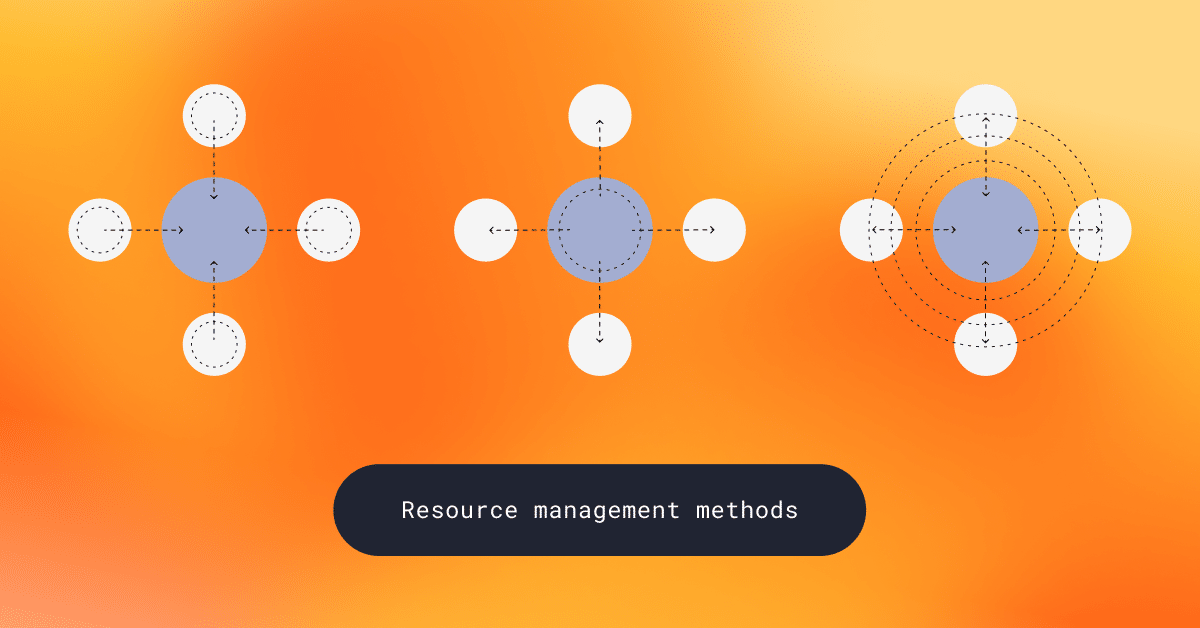
The three main resource management models are the centralized model, the local or decentralized model, and a hybrid model that combines centralized and local management approaches. These three human resource management models differ in terms of control, flexibility, and resource allocation. Once you understand each model, you can choose the one that best aligns with your business’s operations, goals, and needs.
Centralized Resource Model
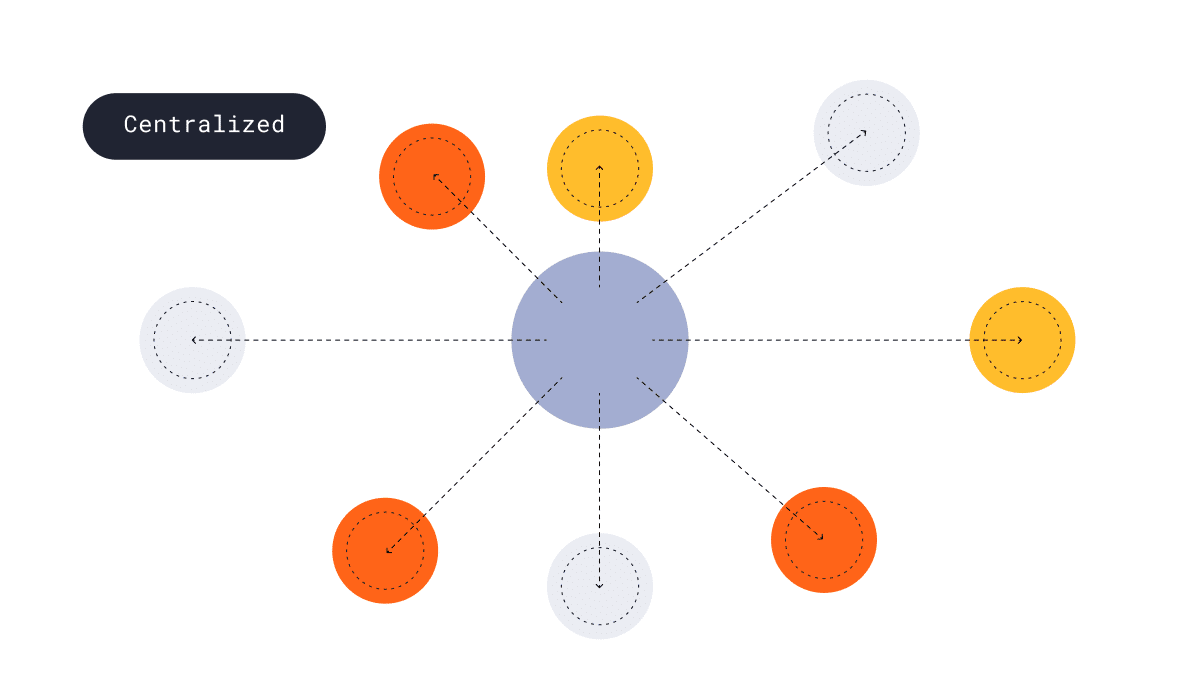
A centralized resource model has a small or central group or individual that makes all human resource management decisions. This central authority could be an entire resource management team or a single manager or executive.
Advantages of the centralized model:
Makes it easier to see all resources at once
Increased visibility improves resource allocation
Can help you stay within your budget and project timeline
Ensures employees are perfectly utilized so no one gets bored or burnt out
Challenges associated with the centralized model:
Little to no back-up options in case a part of the central authority fails
Less collaboration because decision-making is highly concentrated in a small group
Fewer opportunities for input from employees
Local Resource Model
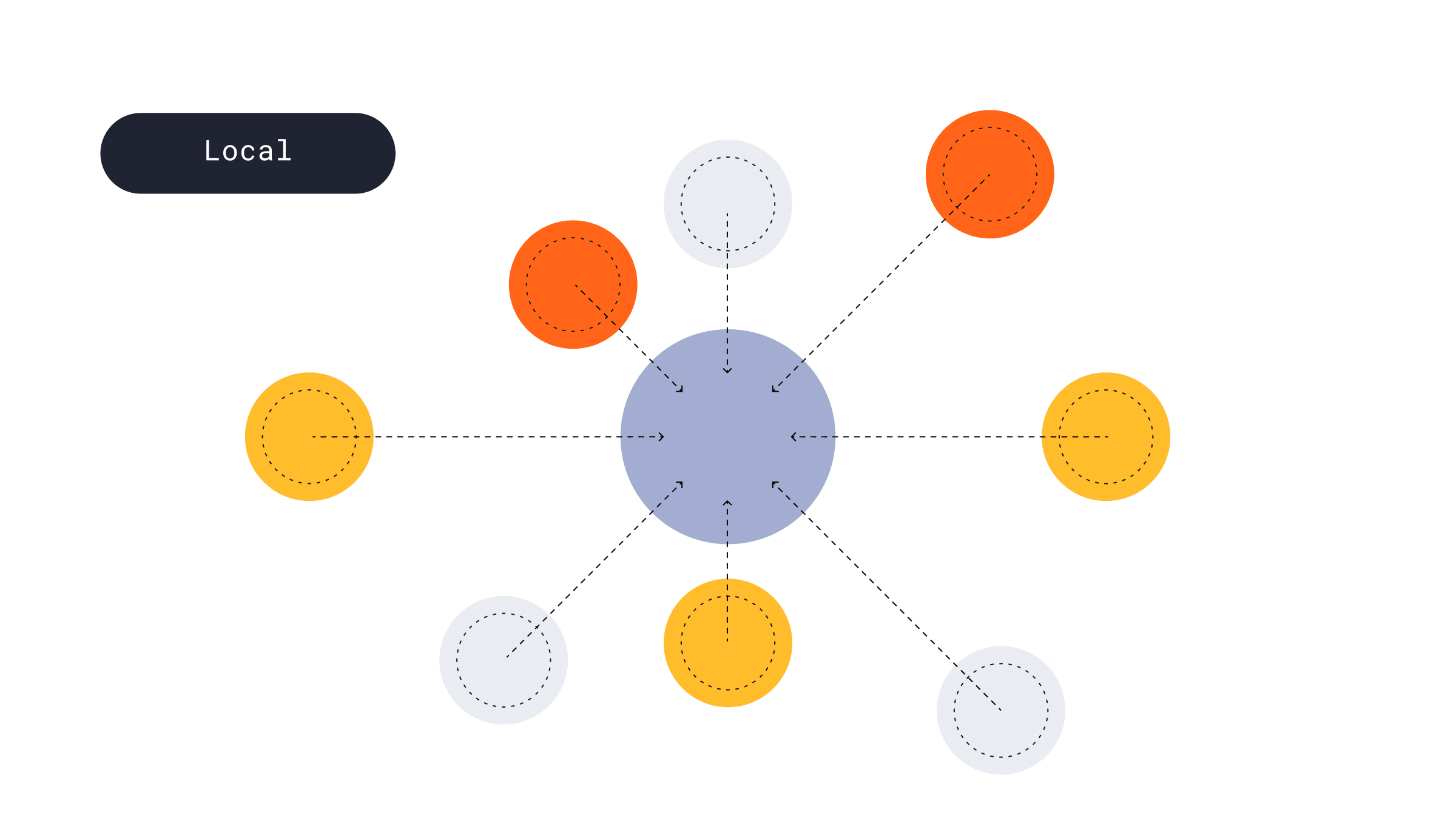
The local resource model, sometimes called the decentralized model, is the opposite of the centralized model. In a local resource model, individual teams handle their own resource management. Instead of a central authority, the responsibility of resource management is distributed between teams or departments.
Advantages of the local model:
Promotes collaboration
Increased collaboration can lead to more innovation
Aligns with democratic values and systems
Increases employee buy-in
If one part fails, the whole system does not fail
Challenges associated with the local model:
May lead to less cross-department collaboration
Less standardized systems, policies, and procedures
No resource management happening at the whole organization level
Hybrid Resource Model
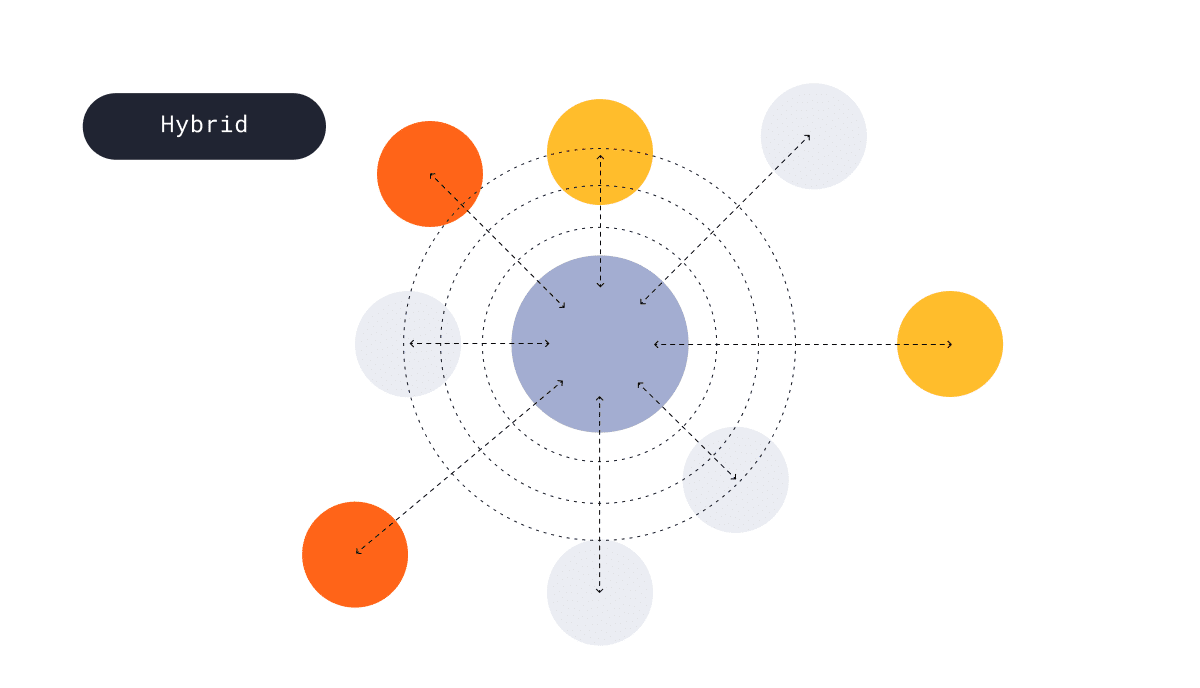
The hybrid resource model is a combination of the centralized and decentralized models. Individual teams hold some responsibility for their own resource management, while some decisions are made by a central authority and passed down. The key to effectively leveraging the hybrid model of resources is to determine which specific resource management tasks are best completed at the local level and which are best completed at the central level.
Advantages of the hybrid model:
Has the benefits of both the local and centralized models
Can alleviate some of the challenges of the local and centralized models
Provides the most flexibility in resource management
Promotes collaboration within and across teams
Challenges associated with the hybrid model:
Can be complex and difficult to implement
Can lead to duplicate work if systems and communication are inadequate
Less consistency in decision-making than in the centralized approach
Which Model Of Resources Is Right For Your Business?
Every model of resources has benefits and challenges. Evaluate each one with your business’s goals and unique culture in mind. As you are evaluating each resource model, also consider the following factors:
The size of your organization
The industry you operate in
Your operational complexity
The team structures you use
Smaller organizations like agencies may be able to more easily implement and benefit from a decentralized resource model. A local model can promote growth for a newer business or an established small business looking to expand. Medium-to-large businesses will likely have more project success with a centralized or hybrid model. Multinational businesses should consider the hybrid model for the most flexibility between locations.
How To Make A Resource Model Into A Process
After you’ve illuminated which resource model you want to use, it’s time to implement it. While the structure of these models is clear, the way to make the structure fit your organization may not be so clear. Implementation involves transitioning your chosen resource management model into an actionable process by defining workflows, roles, and responsibilities.
Download Parallax’s strategic forecasting e-book to get advice and tools for weekly and long-term resource planning. Once you have a system set up, it’s essential to regularly monitor it to ensure the model is functioning efficiently. Technologies like resource planning software streamline this process and make efficient resource management accessible to any organization.
See Parallax’s Resource Management Software
Human resources are the single most important piece of any project, and putting the right people in the right roles can transform your organization. Using a systematic approach to human resource management with a defined resource model is the best way to ensure success. Maximize the benefits of resourcing models with Parallax’s resource management software. Agencies and studios that use our software see a 107% increase in revenue per billable employee.
Parallax’s software pairs well with any of the resource models. Teams and departments can access real-time utilization insights to empower them to make adjustments to optimize their performance. Those in charge of a resource management plan can also see all active projects to keep an eye on budgets, timelines, and resource utilization across departments and update resource plans to meet financial targets as needed.
A resource model defines how a business organizes, allocates, and manages its human resources. Without a clear model, organizations often end up wasting resources or experiencing resource shortages, both of which use company time and money inefficiently.
What is a centralized resource model?
A centralized resource model has a small or central group or individual that makes all human resource management decisions. This central authority could be an entire resource management team or a single manager or executive.
What is a local resource model?
The local resource model, sometimes called the decentralized model, is the opposite of the centralized model. In a local resource model, individual teams handle their own resource management. Instead of a central authority, the responsibility of resource management is distributed between teams or departments.
What is a hybrid resource model?
The hybrid resource model is a combination of the centralized and decentralized models. Individual teams hold some responsibility for their own resource management, while some decisions are made by a central authority and passed down.
Which Model Of Resources Is Right For Your Business?
As you evaluate if you should use a centralized, local, or hybrid resource model, consider the following factors: The size of your organization, the industry you operate in, your operational complexity, and the team structures you use
A resource management plan isn’t just a checkbox for your project kickoff; it’s the blueprint for aligning your people, timelines, and budgets to work in harmony. Without a solid plan, even the strongest team can collapse under shifting demands and mismatched priorities. But there is a way to build a foundation for success that’s both balanced and forward-looking: a resource management plan.
Resource management plans help businesses ensure their teams are utilized effectively and protected from burnout while keeping project goals on track. From analyzing skill sets and availability to forecasting capacity and margins, a well-crafted plan is the secret to healthier projects and happier teams.
A resource management plan is a structured approach to allocating, scheduling, and utilizing resources such as employees, tools, and budgets, to meet project and organizational goals. It clarifies who is doing what, when, and at what cost; ensuring that teams maintain healthy utilization.
Using resource management plans, organizations can balance workloads, maintain efficiency, and align their workforce with strategic priorities. It’s the key to unlocking greater productivity, reducing risks, and improving project outcomes.
Parts Of A Resource Management Plan
A well-developed resource management plan is built on several key components. The different parts of the resource plan work together to provide a clear roadmap for managing your resources effectively and strategically. Prioritize only one, and raise risks of running into roadblocks in delivery. Incorporate them all, and you’re set up for a successful project.
Let’s look at the different parts of a resource management plan and how they work together to create a seamless project resource plan.
Resources And Resource Data
Identifying available resources and documenting their skills, roles, and responsibilities is the foundation of any resource plan. Accurate data on team members’ expertise and capacity helps inform what assets can be utilized and where there may be gaps.
Resource Availability
Resource availability considers working hours, time off, and current and forecasted capacity. Tools like capacity forecasting software can help managers plan and consider upcoming project assignments when developing resource plans. This allows them to strategically match resources to projects, ensuring teams stay productive without risking employee burnout or underutilization.
Budget And Project Scope
Budget goals and project objectives should be considered to guide how resources are assigned. Aligning resourcing goals with project goals helps avoid overspending and ensures project targets like margin and scoped hours are met without sacrificing quality or missing deadlines. Using a robust resource planner, managers can see how their resource plans affect project goals and adjust accordingly.
Crafting a resource management plan requires strategic planning and monitoring. With the right approach, your resource management plans will help to reduce the risk of potential bottlenecks and support timely, quality project delivery.
Assess Resources And Identify Gaps
Identify and document your current resources, including roles, skills, and capacity. Create a clear catalog that organizes this information, making it easy to match team members to tasks based on their expertise. This step also helps identify gaps in capacity or skill sets on your team when planning a project.
Define Project Requirements
Outline the specific roles and timeframes needed for your project. For instance, you might need a web designer for 6 hours daily from February 2nd to February 15th. This step essentially creates a template for your resource plan, laying out what roles are needed and when to successfully meet project deadlines and milestones.
Allocate Resources Based on Goals
Assign team members to roles by matching their availability and skills to project needs. Align resource allocation with broader goals, such as maintaining utilization targets (e.g., 80%) or improving project margins. Use data from past projects and capacity plans to anticipate demand and ensure flexibility for unexpected shifts. This approach balances immediate project needs with long-term business objectives.
Monitor Progress and Adjust as Needed
Once your plan is in place, track metrics like utilization, project progress, and team capacity. Be proactive in adjusting allocations to solve for changes in project scope or shifting priorities. Regular monitoring ensures that your resource plan continues to support your projects.
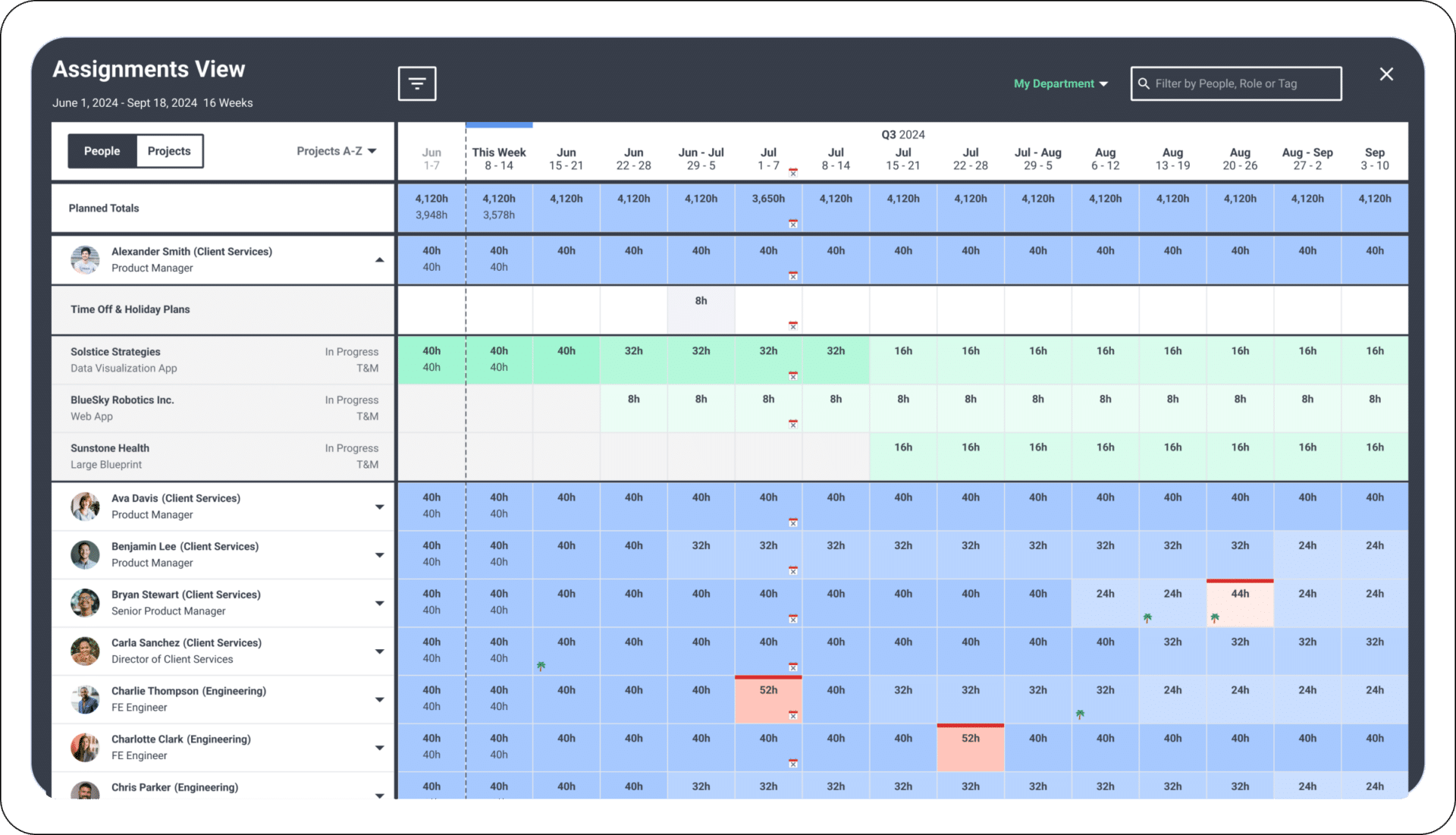
The resource management plan sample below can give you an idea of how resource management software can help organize and create clear visibility into the makeup of your resource management plans.
Consider Vokal, a digital marketing agency that struggled with resource allocation and project scoping. By implementing resource management planning initiatives, Vokal gained visibility into team capacity and resource needs to help them accurately scope client projects.
Their plans can now identify needed roles, track team capacity, and align resources with project priorities. This approach helped them make strategic hiring decisions, scope projects more accurately, and increase their project margins.
Why Are Resource Management Plans Important?
Resource management plans are essential to developing, maintaining, and providing feedback for efficient operations. They help organizations avoid common pitfalls during delivery like last-minute hiring or project delays. By bringing together key parts of project delivery including available resources, project needs, budgets, and capacity, resource management plans help organizations:
Create more accurate project scopes
Improve team efficiency
Reduce burnout risk and underutilization of resources
Book A Demo To See Parallax’s Resource Management Software
Software specifically built for resource management can help set up and streamline your resource management and planning processes. Parallax’s resource management tool provides clear visibility into how managers can strategically allocate resources and align plans with project and company goals.
Learn how agencies see a 5% increase in utilization on average after adopting Parallax for resource planning. Book a Parallax demo.
Frequently Asked Questions
What Is A Resource Management Plan?
A resource management plan is a structured approach to allocating, scheduling, and utilizing resources such as employees, tools, and budgets, to meet project and organizational goals. It clarifies who is doing what, when, and at what cost; ensuring that teams maintain healthy utilization.
Why Are Resource Management Plans Important?
Resource management plans are essential to developing, maintaining, and providing feedback for efficient operations. They help organizations avoid common pitfalls during delivery like last-minute hiring or project delays.
Imagine you’re throwing a dinner party, but instead of knowing exactly who’s coming, you’re guessing based on vague RSVPs like “maybe” or “I’ll try to make it.” You buy too many groceries, and half the food goes uneaten—or worse, you run out of chairs because way more people show up than expected.
Now scale that chaos to a professional services business. That’s capacity planning: the delicate art of aligning your team’s availability with unpredictable client demands. Done right, it keeps projects running smoothly and profits healthy; done wrong, you’re left scrambling for resources or sitting idle, wondering where it all went wrong.
Capacity planning is the process of determining the amount of work an organization can take on with their available resources in a given time period. It takes into account the types of roles, skills, time, and budget projects will need in order to be completed successfully, while considering projects that may already be in delivery or in the pipeline.
The planning helps give decision-makers a clear view of what types of projects can be completed efficiently and cost-effectively while maintaining alignment with the organization’s strategic goals.
Why Is Capacity Planning Important?
Capacity plans help agencies and professional service organizations operate as efficiently as possible, minimizing unexpected roadblocks in delivery and producing quality output for clients.
When done effectively, it supports:
Strategic growth goals: by aligning projects and resources with long term organizational goals and market trends.
Cost management: by guiding resource plans to staff projects effectively, avoiding underutilizing employees or last-minute hiring.
Efficient operations: maintaining the balance between available capacity and upcoming demand, supporting smooth workflows and healthy employee utilization levels.
Planning strategies can differ based on an organization’s goals and current capacity. Each strategy aims to align resources with demand, however, lead, lag, and match strategies differ when it comes to approaching project forecasting. Let’s break down each strategy and how they work:
Lead Strategy
The lead strategy focuses on planning based on anticipated demand level. Organizations using this strategy adjust capacity ahead of time, ensuring that when demand increases capacity is available to deliver.
The downside of this approach is risking being over capacity, resulting in increased costs and underutilized employees.
Lag Strategy
Unlike the lead strategy, the lag strategy only takes into account current demand. This strategy allows businesses to minimize costs, avoiding the risk of being over capacity by acquiring resources as demand increases.
A sudden increase in demand may cause challenges for organizations who use this strategy. Resources may become overutilized, risking employee burn out, or the business may need to delay projects until capacity has been adjusted.
Match Strategy
The match strategy is a combination of both the lag and lead strategy, planning for current demand as well as forecasting for future demand. The goal of this strategy is to maintain healthy resource utilization by matching capacity to demand as accurately as possible.
To succeed with the match strategy, teams must work diligently to forecast demand and plan capacity accurately. With the right approach, the match strategy is the most cost effective and efficient strategy.
How To Capacity Plan
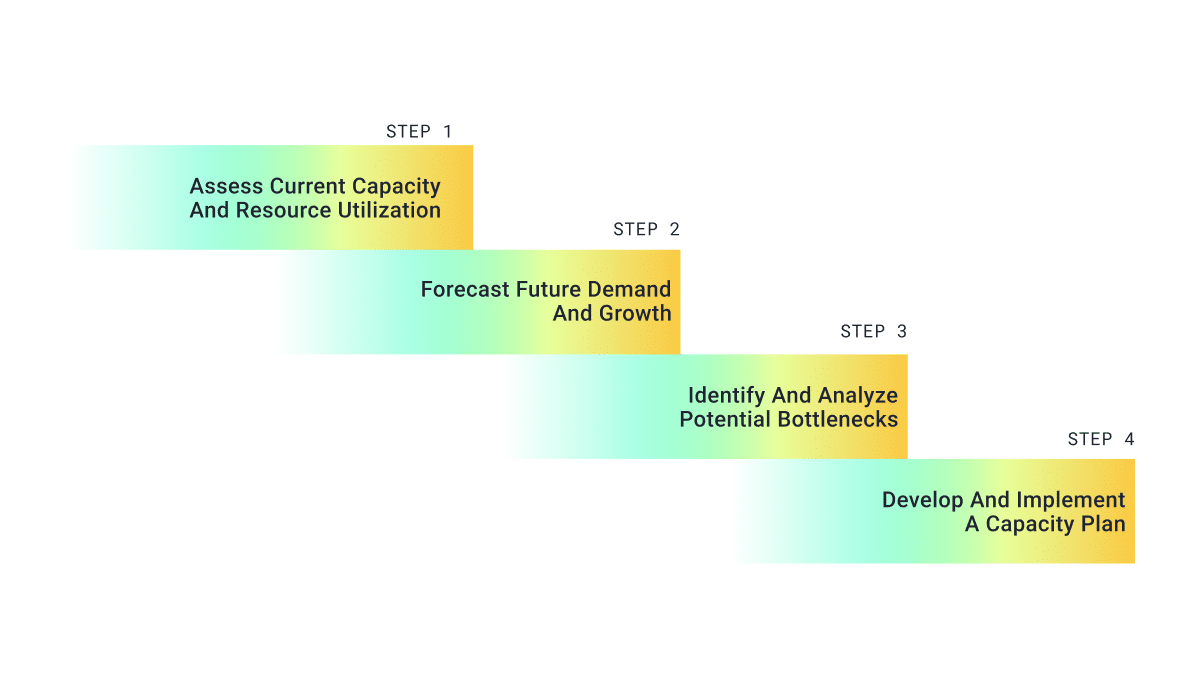
A well crafted capacity plan involves evaluating your current capacity, forecasting future demand, and strategically allocating resources. With the right approach, capacity planning can help organizations improve the accuracy of resource allocation, prepare for growth, and get ahead of potential roadblocks early.
Assess Current Capacity And Resource Utilization
Assessing your current capacity and resource utilization is the first step to creating a successful plan. Tools like time-tracking software and resource management dashboards can provide insight into metrics like resource utilization and forecast variance to help identify gaps or inefficiencies to address. For example, trends that show resources are consistently over-utilized may indicate a capacity shortage.
Forecast Future Demand And Growth
Forecasting future demand helps identify how much capacity you will need to successfully complete upcoming projects. With future demand taken into account, capacity plans help organizations prepare for fluctuations like seasonal dips or spikes in demand by allowing them to increase their workforce, adjust schedules, and allocate resources more efficiently.
Identify And Analyze Potential Bottlenecks
Identifying potential roadblocks within your capacity plans ensure that projects are delivered on time and as efficiently as possible. By anticipating future demand, organizations can be proactive and get ahead of bottlenecks such as resource shortages, overstaffing, or delays that could affect project timelines or quality.
Develop And Implement A Capacity Plan
Now that you know your team’s capacity and requirements of current and forecasted projects, it’s time to use these insights to create your capacity plan.
Team capacity planning consists of aligning resource schedules, skills, and workloads to strategically allocate resources to projects both present and future. Tools like Parallax that help you both forecast capacity and manage resources as well as scenario plan, provide transparency into who is available to be staffed based on their capacity and utilization.
Once you successfully align your capacity plan with your resource plan, regularly monitor its effectiveness and adjust as project or demand changes occur.
Capacity Planning Examples
Praxentimproved the coordination between their sales and delivery teams by using capacity plans to scenario plan for won deals starting in the sales process.
Raindropencountered many swings in demand, causing teams to be over capacity. By using a capacity planning tool, they were able to smooth out curves in resource demand and allocate team members based on utilization goals.
Clear Digitalforecasts their capacity and utilization to identify and understand where there may be discrepancies between resource availability and project requirements. As they grew their business, insights from the capacity plan became essential to their operations.
Capacity planning provides clear visibility into workload distribution and resource availability, helping project managers and resource managers create more reliable work plans and delivery scopes. Capacity plans also provide feedback to teams on delivery status and effectiveness of the resource plan, allowing for adjustments and improvements to be made on future forecasts.
Enables Teams To Deliver Projects On Time And Budget
By aligning resources with forecasted project requirements, capacity planning helps teams meet deadlines and stay within budget. This helps to reduce last-minute surprises and account for different scenarios to drive successful project outcomes.
Easier Scalability For Growth
Capacity forecasting and planning also supports strategic hiring initiatives by anticipating resource needs ahead of time. Businesses can more easily scale operations without over utilizing teams using capacity planning as new business increases.
Challenges In Capacity Planning
Capacity planning offers many advantages, but to execute effectively, there are a few tips we recommend to keep forecasts accurate, and avoid challenges:
Use a capacity planning and resource management tool like Parallax to keep forecasts accurate and resource plans up to date.
Plan for different scenarios and build flexibility into your plans to adapt to demand changes.
Integrate your tools to limit inaccuracies and human error in forecast data.
Capacity planning software like Parallax helps teams efficiently create capacity plans and apply the insights to their resource plans.
Parallax uses data from other operational software like your CRM (customer relationship management tool) and time tracking software to inform, predict, and summarize operational processes and key performance metrics.
Lets look at a few Parallax features that support effective capacity planning:
Creating an effective resource plan is essential to supporting efficient operations and growth within your organization. Forecasting and planning team capacity allows businesses to be proactive to market changes, increase transparency among teams, and maximizes team productivity.
Parallax’s software is designed to help you forecast demand, allocate resources, and reach your strategic business initiatives.
Book a live demo to see how Parallax can help streamline your capacity planning and resource management process.
Frequently Asked Questions
What Is Capacity Planning?
Capacity planning is the process of determining the amount of work an organization can take on with their available resources in a given time period. It takes into account the types of roles, skills, time, and budget projects will need in order to be completed successfully, while considering projects that may already be in delivery or in the pipeline.
Why Is Capacity Planning Important?
Capacity plans help agencies and professional service organizations operate as efficiently as possible, minimizing unexpected roadblocks in delivery and producing quality output for clients.
How Does Capacity Planning Software Work?
Capacity planning software like Parallax helps teams efficiently create capacity plans and apply the insights to their resource plans.