How To Create A Comprehensive Resource Management Plan

Resource Management Planning Graphic Example

A resource management plan isn’t just a checkbox for your project kickoff; it’s the blueprint for aligning your people, timelines, and budgets to work in harmony. Without a solid plan, even the strongest team can collapse under shifting demands and mismatched priorities. But there is a way to build a foundation for success that’s both balanced and forward-looking: a resource management plan.

Resource management plans help businesses ensure their teams are utilized effectively and protected from burnout while keeping project goals on track. From analyzing skill sets and availability to forecasting capacity and margins, a well-crafted plan is the secret to healthier projects and happier teams.

Discover how to optimize resource planning for your projects with Parallax’s resource management software.

What Is A Resource Management Plan?

A resource management plan is a structured approach to allocating, scheduling, and utilizing resources such as employees, tools, and budgets, to meet project and organizational goals. It clarifies who is doing what, when, and at what cost; ensuring that teams maintain healthy utilization. 

Using resource management plans, organizations can balance workloads, maintain efficiency, and align their workforce with strategic priorities. It’s the key to unlocking greater productivity, reducing risks, and improving project outcomes.

Parts Of A Resource Management Plan

A well-developed resource management plan is built on several key components. The different parts of the resource plan work together to provide a clear roadmap for managing your resources effectively and strategically. Prioritize only one, and raise risks of running into roadblocks in delivery. Incorporate them all, and you’re set up for a successful project. 

Let’s look at the different parts of a resource management plan and how they work together to create a seamless project resource plan. 

Resources And Resource Data

Identifying available resources and documenting their skills, roles, and responsibilities is the foundation of any resource plan. Accurate data on team members’ expertise and capacity helps inform what assets can be utilized and where there may be gaps. 

Resource Availability

Resource availability considers working hours, time off, and current and forecasted capacity. Tools like capacity forecasting software can help managers plan and consider upcoming project assignments when developing resource plans. This allows them to strategically match resources to projects, ensuring teams stay productive without risking employee burnout or underutilization.

Budget And Project Scope

Budget goals and project objectives should be considered to guide how resources are assigned. Aligning resourcing goals with project goals helps avoid overspending and ensures project targets like margin and scoped hours are met without sacrificing quality or missing deadlines. Using a robust resource planner, managers can see how their resource plans affect project goals and adjust accordingly. 

Learn how Parallax simplifies resource management for digital agencies.

How To Create A Resource Management Plan

Crafting a resource management plan requires strategic planning and monitoring. With the right approach, your resource management plans will help to reduce the risk of potential bottlenecks and support timely, quality project delivery. 

Assess Resources And Identify Gaps

Identify and document your current resources, including roles, skills, and capacity. Create a clear catalog that organizes this information, making it easy to match team members to tasks based on their expertise. This step also helps identify gaps in capacity or skill sets on your team when planning a project. 

Define Project Requirements 

Outline the specific roles and timeframes needed for your project. For instance, you might need a web designer for 6 hours daily from February 2nd to February 15th. This step essentially creates a template for your resource plan, laying out what roles are needed and when to successfully meet project deadlines and milestones. 

Allocate Resources Based on Goals 

Assign team members to roles by matching their availability and skills to project needs. Align resource allocation with broader goals, such as maintaining utilization targets (e.g., 80%) or improving project margins. Use data from past projects and capacity plans to anticipate demand and ensure flexibility for unexpected shifts. This approach balances immediate project needs with long-term business objectives.

Monitor Progress and Adjust as Needed

Once your plan is in place, track metrics like utilization, project progress, and team capacity. Be proactive in adjusting allocations to solve for changes in project scope or shifting priorities. Regular monitoring ensures that your resource plan continues to support your projects.

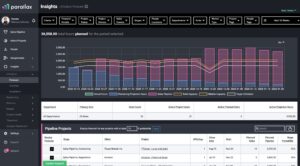
The resource management plan sample below can give you an idea of how resource management software can help organize and create clear visibility into the makeup of your resource management plans. 

plan resource management

Read how digital agencies use Parallax to streamline their resource management plans.

Resource Management Plan Example

Consider Vokal, a digital marketing agency that struggled with resource allocation and project scoping. By implementing resource management planning initiatives, Vokal gained visibility into team capacity and resource needs to help them accurately scope client projects. 

Their plans can now identify needed roles, track team capacity, and align resources with project priorities. This approach helped them make strategic hiring decisions, scope projects more accurately, and increase their project margins. 

Why Are Resource Management Plans Important?

Resource management plans are essential to developing, maintaining, and providing feedback for efficient operations. They help organizations avoid common pitfalls during delivery like last-minute hiring or project delays. By bringing together key parts of project delivery including available resources, project needs, budgets, and capacity, resource management plans help organizations: 

  • Create more accurate project scopes
  • Improve team efficiency 
  • Reduce burnout risk and underutilization of resources 
  • Anticipate potential bottlenecks 
  • And monitor project health 

Next step: How to level up your resource management 

Book A Demo To See Parallax’s Resource Management Software

Software specifically built for resource management can help set up and streamline your resource management and planning processes. Parallax’s resource management tool provides clear visibility into how managers can strategically allocate resources and align plans with project and company goals.

Learn how agencies see a 5% increase in utilization on average after adopting Parallax for resource planning. Book a Parallax demo.

Parallax Welcomes New CEO to Lead Next Stage of Growth and Innovation

Parallax welcomes new CEO (with image of Jeff Eckerle)

Edina, MN — December 10, 2024 — Parallax, a leading provider of predictive forecasting and resource management software, announced today that Jeff Eckerle has been appointed as the company’s new CEO. Eckerle succeeds Tom O’Neill, Parallax’s founding CEO, who led the company’s early growth and established it as a trailblazer in helping digital service organizations unlock the full potential of their teams.

Parallax developed a platform designed for professional services firms with robust predictive analytics, resource management and strategic planning capabilities. It integrates seamlessly with clients’ existing systems, replacing complex spreadsheets and fragmented forecasting tools with a single, data-driven platform. 

“Founding Parallax has been one of the most rewarding experiences of my career. I’ve had the privilege of working with an incredible team and visionary customers to build software that helps companies align their business goals with their people’s ambitions,” said Tom O’Neill, Founding CEO of Parallax. “The company is in great hands with Jeff Eckerle, whose expertise makes him the ideal leader for Parallax’s next phase of innovation.”

Eckerle brings extensive industry and leadership experience, as well as a proven track record in scaling technology companies. His leadership will support Parallax as it continues to introduce new features and improvements, including recently launched timesheet capabilities that streamline time-tracking and billing within the platform, adding another layer of functionality for clients.

“Parallax stands out for its excellent core product and dedication to transforming businesses through smarter resource management,” said Jeff Eckerle, CEO of Parallax. “With several key product enhancements set to launch in the coming months, we’re more focused than ever on how evolving technology is creating opportunities for our customers to redefine how they manage people and deliver projects. It’s an incredibly exciting time to be leading a software company in this space.”

Parallax raised a $12 Million Series B funding round in 2023, bringing total funding to $24.5 Million with backing from Baird Ventures, Grotech and Rally Ventures.

“Jeff’s combination of product and industry knowledge, GTM expertise and people-focused leadership is optimal for guiding Parallax’s next phase of growth,” said Jeff Hinck, Partner at Rally Ventures. “Tom laid a solid foundation with a strong core product. We’re confident that Jeff’s leadership will build on that great success. We’re looking forward to supporting the team as they enter their next exciting chapter.”

About Parallax


Parallax is a strategic, predictive capacity and resource management solution built for digital service organizations. Centered around the most critical agency operational pillars – capacity planning, resource management, project financials, and operations intelligence – Parallax helps maximize efficiency of resources, ensure utilization goals are met, and track and improve project margin. For more information on Parallax and its solutions, please visit www.getparallax.com.

Media Contact

Miranda Lawler
miranda.lawler@getparallax.com

What Is Capacity Planning? How To Effectively Capacity Plan

balancing demand and capacity abstract image

Imagine you’re throwing a dinner party, but instead of knowing exactly who’s coming, you’re guessing based on vague RSVPs like “maybe” or “I’ll try to make it.” You buy too many groceries, and half the food goes uneaten—or worse, you run out of chairs because way more people show up than expected. 

Now scale that chaos to a professional services business. That’s capacity planning: the delicate art of aligning your team’s availability with unpredictable client demands. Done right, it keeps projects running smoothly and profits healthy; done wrong, you’re left scrambling for resources or sitting idle, wondering where it all went wrong. 

Optimize team performance with Parallax capacity planning software.

What We’ll Cover

What Is Capacity Planning?

benefits of capacity planning abstract image

Capacity planning is the process of determining the amount of work an organization can take on with their available resources in a given time period. It takes into account the types of roles, skills, time, and budget projects will need in order to be completed successfully, while considering projects that may already be in delivery or in the pipeline. 

The planning helps give decision-makers a clear view of what types of projects can be completed efficiently and cost-effectively while maintaining alignment with the organization’s strategic goals.

Why Is Capacity Planning Important?

Capacity plans help agencies and professional service organizations operate as efficiently as possible, minimizing unexpected roadblocks in delivery and producing quality output for clients. 

When done effectively, it supports:

Strategic growth goals: by aligning projects and resources with long term organizational goals and market trends.

Cost management: by guiding resource plans to staff projects effectively, avoiding underutilizing employees or last-minute hiring. 

Efficient operations: maintaining the balance between available capacity and upcoming demand, supporting smooth workflows and healthy employee utilization levels.

Learn how strategic capacity planning improves team utilization rates.

Capacity Planning Strategies

Planning strategies can differ based on an organization’s goals and current capacity. Each strategy aims to align resources with demand, however, lead, lag, and match strategies differ when it comes to approaching project forecasting. Let’s break down each strategy and how they work:

Lead Strategy

The lead strategy focuses on planning based on anticipated demand level. Organizations using this strategy adjust capacity ahead of time, ensuring that when demand increases capacity is available to deliver. 

The downside of this approach is risking being over capacity, resulting in increased costs and underutilized employees. 

Lag Strategy

Unlike the lead strategy, the lag strategy only takes into account current demand. This strategy allows businesses to minimize costs, avoiding the risk of being over capacity by acquiring resources as demand increases. 

A sudden increase in demand may cause challenges for organizations who use this strategy. Resources may become overutilized, risking employee burn out, or the business may need to delay projects until capacity has been adjusted. 

Match Strategy

The match strategy is a combination of both the lag and lead strategy, planning for current demand as well as forecasting for future demand. The goal of this strategy is to maintain healthy resource utilization by matching capacity to demand as accurately as possible. 

To succeed with the match strategy, teams must work diligently to forecast demand and plan capacity accurately. With the right approach, the match strategy is the most cost effective and efficient strategy. 

How To Capacity Plan

A well crafted capacity plan involves evaluating your current capacity, forecasting future demand, and strategically allocating resources. With the right approach, capacity planning can help organizations improve the accuracy of resource allocation, prepare for growth, and get ahead of potential roadblocks early. 

Steps of capacity planning

Assess Current Capacity And Resource Utilization

Assessing your current capacity and resource utilization is the first step to creating a successful plan. Tools like time-tracking software and resource management dashboards can provide insight into metrics like resource utilization and forecast variance to help identify gaps or inefficiencies to address. For example, trends that show resources are consistently over-utilized may indicate a capacity shortage. 

Forecast Future Demand And Growth

Forecasting future demand helps identify how much capacity you will need to successfully complete upcoming projects. With future demand taken into account, capacity plans help organizations prepare for fluctuations like seasonal dips or spikes in demand by allowing them to increase their workforce, adjust schedules, and allocate resources more efficiently.  

Identify And Analyze Potential Bottlenecks

Identifying potential roadblocks within your capacity plans ensure that projects are delivered on time and as efficiently as possible. By anticipating future demand, organizations can be proactive and get ahead of bottlenecks such as resource shortages, overstaffing, or delays that could affect project timelines or quality.  

Develop And Implement A Capacity Plan

Now that you know your team’s capacity and requirements of current and forecasted projects, it’s time to use these insights to create your capacity plan.

Team capacity planning consists of aligning resource schedules, skills, and workloads to strategically allocate resources to projects both present and future. Tools like Parallax that help you both forecast capacity and manage resources as well as scenario plan, provide transparency into who is available to be staffed based on their capacity and utilization.

Once you successfully align your capacity plan with your resource plan, regularly monitor its effectiveness and adjust as project or demand changes occur.

Capacity Planning Examples

  • Praxent improved the coordination between their sales and delivery teams by using capacity plans to scenario plan for won deals starting in the sales process.
  • Raindrop encountered many swings in demand, causing teams to be over capacity. By using a capacity planning tool, they were able to smooth out curves in resource demand and allocate team members based on utilization goals. 
  • Clear Digital forecasts their capacity and utilization to identify and understand where there may be discrepancies between resource availability and project requirements. As they grew their business, insights from the capacity plan became essential to their operations. 

Read more about how Parallax customers capacity plan to improve operations

Capacity Planning Benefits

Team Transparency

Capacity planning provides clear visibility into workload distribution and resource availability, helping project managers and resource managers create more reliable work plans and delivery scopes. Capacity plans also provide feedback to teams on delivery status and effectiveness of the resource plan, allowing for adjustments and improvements to be made on future forecasts. 

Enables Teams To Deliver Projects On Time And Budget

By aligning resources with forecasted project requirements, capacity planning helps teams meet deadlines and stay within budget. This helps to reduce last-minute surprises and account for different scenarios to drive successful project outcomes. 

Easier Scalability For Growth

Capacity forecasting and planning also supports strategic hiring initiatives by anticipating resource needs ahead of time. Businesses can more easily scale operations without over utilizing teams using capacity planning as new business increases. 

Challenges In Capacity Planning

Capacity planning offers many advantages, but to execute effectively, there are a few tips we recommend to keep forecasts accurate, and avoid challenges: 

  1. Use a capacity planning and resource management tool like Parallax to keep forecasts accurate and resource plans up to date. 
  2. Plan for different scenarios and build flexibility into your plans to adapt to demand changes. 
  3. Integrate your tools to limit inaccuracies and human error in forecast data. 

Learn more capacity planning best practices

How Does Capacity Planning Software Work?

Capacity planning software like Parallax helps teams efficiently create capacity plans and apply the insights to their resource plans. 

Parallax uses data from other operational software like your CRM (customer relationship management tool) and time tracking software to inform, predict, and summarize operational processes and key performance metrics. 

Lets look at a few Parallax features that support effective capacity planning: 

  1. Resource capacity forecasting by hours and full time employees
  2. Hiring forecasts
  3. Shaper tool 
  4. Project health and variance reports
  5. People and projects assignment views 
  6. Utilization reporting and forecasting 

See Parallax’s Capacity Planning Software

Creating an effective resource plan is essential to supporting efficient operations and growth within your organization. Forecasting and planning team capacity allows businesses to be proactive to market changes, increase transparency among teams, and maximizes team productivity.

Parallax’s software is designed to help you forecast demand, allocate resources, and reach your strategic business initiatives. 

Book a live demo to see how Parallax can help streamline your capacity planning and resource management process. 

What is Resource Management?

funnel

If you’re a CEO, head of operations, or project manager you’ve likely been asked, “What is resource management?” Efficient human resource management is vital to keeping your business running smoothly, reducing costs, and increasing profitability.   

Are you tired of having too many resources contributing to unplanned expenses or having resource shortages disrupting daily operations? Intentional resource planning and management allow you to stop reacting and start being proactive with your human resource use. This guide will explain resource management, why it matters, and how to do it well.

Take charge of your human resources use with Parallax’s resource management software.

What We’ll Cover

What Is Resource Management?

Resource management involves planning, allocating, and overseeing a company’s resources. What are resources in a business? In this context, resources mean employees, but depending on your industry, they can also refer to tools, equipment, and time. Resource management encompasses any processes and techniques used to plan, track, and manage resource use. It aims to determine the most cost-effective combination of resources and how to use them.

There are several different resource management techniques that companies can leverage based on their needs and goals:

  • Resource allocation: Having a list of employees and assigning when and what role they will have for different projects.
  • Resource utilization: Analyzing how resources are currently being used, overused, or underused, and offering suggestions to improve the efficiency of resource use.
  • Resource forecasting: Making predictions about what resources will be needed in the future to project, plan, and prioritize efficiently.

Why Is Resource Management Important?

Why is it important to manage resources thoughtfully? An efficient resource management plan helps maximize productivity, improve project outcomes, and increase your business’s return on investment (ROI). 

Employee shortages can halt operations, potentially causing missed deadlines, other employee burnout, upset customers, and revenue loss. On the other hand, too many employees who don’t have enough work can lead to underutilization. Resource managers look for the sweet spot where there are enough employees who can do the required work.

Resource Management Benefits

Any type of business can benefit from resource management, from startups to multinational companies and storefronts to digital service agencies. By using a systematic method for managing resources, you can gain more control over your business’s costs and ROI. This happens through optimizing the allocation and utilization of resources. 

Effective resource management ensures projects follow the set timeline and budget, improving project efficiency and increasing client satisfaction. Optimizing human resources can also improve team collaboration and communication, increase productivity, and minimize unnecessary labor costs. Let’s explore each of these benefits in more detail. 

Improved Project Efficiency

Resource management improves project efficiency by ensuring the right resources are available when they are needed and that they are utilized effectively. This leads to faster project completion and fewer delays or bottlenecks. Resource use should be constantly monitored and compared to plans, budgets, and goals for streamlined operations. Projects can be adjusted as needed to avoid waste and operate at maximum efficiency.

Enhanced Team Collaboration And Communication

Resource management enhances team collaboration by fostering clear communication about roles, availability, and responsibilities. This transparency enhances accountability, aligns team members, and reduces misunderstandings. It also allows executives and managers to create dynamic teams that can be flexible and shift as needed to optimize resource use. When employees are set up for success, they can focus on innovation and efficiency.

Excellent employee resource management is key to leveling up your business’s productivity. 

Optimized Resource Allocation

Optimized resource allocation ensures that resources are used where they’re most effective. This reduces underutilization and employee burnout. It ensures resources are applied strategically to meet project and organizational goals. Employees should also be evaluated regularly to measure and improve their performance.

Increased Utilization

Resource management helps increase resource utilization by minimizing idle time and maximizing productivity. This ensures you are fully leveraging available resources. For example, if your team is going to be overutilized for a month due to a one-off project, you can then confidently hire a contract role versus a full-time employee.

Resource management software

Resource Management Examples

Not sure what resource management looks like in action? The examples below from businesses that use Parallax’s resource management software illustrate real-life applications that enhance business operations:

  • Clockwork uses resource management techniques to adjust workloads effectively when an employee is going to be out of work for vacation or another form of leave. This ensures projects stay on track and no one is overworked.
  • Planet Argon integrated resource management software with its customer relationship management (CRM) software and time tracking tools to create a seamless workflow and share information between systems and across teams. This guarantees that everyone is always on the same page. 
  • HUSH leads long-term, large-scale projects. It leveraged resource management software to quickly price large projects and break them up into phases. This makes it easier to allocate resources effectively, adjust plans as needed, and communicate with clients about budget and timing changes.
  • Raindrop started using resource management to improve the bottom line of its business and discovered that a lot of their estimates for time had been off and they were missing around one million dollars in billable revenue. Now, they can bill their clients for all the time that is actually billable.

Learn the differences between resource and task planning, so you can use them both to maximize profits.

How Does Resource Management Software Work?

Resource management is complex and involves many aspects of operations and multiple departments. Resource management software helps businesses plan, track, and allocate resources in a centralized platform.

With Parallax’s resource management software, executives, managers, salespeople, delivery teams, and other employees can all collaborate in one place. Our comprehensive platform uses engaging data to promote transparency and accountability among your team members. It’s easy to share resource plans, view utilization insights, and monitor project progress for improved efficiency.

Resource management skills include the ability to determine what resources will be needed in the future. Predictive software can compute forecasts quickly and accurately, taking into account supply, demand, and market trends. With Parallax’s predictive resource management software, it’s painless to tackle resource management now and plan months ahead to streamline operations and decision-making. 

See Parallax’s Resource Management Software

It’s important to take the time to create a comprehensive resource management plan first. This includes understanding who and how many employees you have, planning how you will acquire new human resources, and creating a schedule of how and when resources will be allocated. It also involves having a system in place to track progress, monitor resource utilization, and adjust as needed for maximum efficiency. 

Effective resource management is the strategy you need to gain control over your human resource use, but you don’t have to go at it alone. Parallax’s resource management software allows you to be proactive and data-driven, taking the guesswork out of resource forecasting, leveling, allocation, and optimization.


Ready to learn more about what resource management software can do for your bottom line? Schedule a live demo of Parallax to see what makes our products unique.

2025 Digital Agency Trend Predictions

Looking ahead to 2025, the agency landscape is evolving fast, with trends like AI, operational shifts, and a focus on workplace culture reshaping the way agencies and consultancies operate. The big question for agency leaders is how to thrive and grow in the face of these changes. 

In our recent Q&A session, Leading Your Agency Into 2025: A Guide for Strategic Planning Through Uncertainty, Parallax’s Head of Customer Success, Grant Hultgren, sat down with Carl Smith, founder of The Bureau, to explore emerging industry trends and how to navigate them.

Table of Contents 

How Will Agencies Adapt With Tech Trends?

The notion that “digital agencies are dying” makes headlines year after year, but industry veterans know this claim does not hold much truth. Instead, these orgs are constantly adapting, evolving their craft to embrace new challenges, agency industry trends and technology innovations. 

Like traditional advertising agencies adjusted to the craze of the internet, today’s digital agencies are taking advantage of new tools and advancements within their specialty fields. Tools like AI, automation, and data analytics help enhance their operations while honing in on being the best at and improving on their craft.

Digital agencies aren’t disappearing anytime soon. However, they may be redefining themselves. With every new shift, from emerging technology to changing client expectations, agencies are treating every challenge as a new opportunity for growth. 

Carl says, “When I hear somebody say digital agencies are dying, I think they don’t realize that we’re not dying, we’re evolving. We’re shedding our skins like a snake. We’re going to use all the new tools and big corporations are going to get to a point where they [can’t do it alone] and who are they going to hire? Digital agencies.”

Will Specialized Agencies Thrive?

Specialization is becoming a defining trend in digital agencies as we approach 2025. With growing demand for niche expertise in areas like SEO, digital design, and cybersecurity to name a few, smaller, specialized agencies are distinguishing themselves in a crowded market. 

By focusing on their specific crafts, these agencies offer a unique value proposition with a level of expertise that’s often harder to find in larger, generalist firms. These agencies are also able to adapt more quickly to shifts in the market, and get ahead of emerging trends whereas process changes in larger firms can get more complicated and time consuming. 

Will A Human-centric Approach be Prioritized Over AI?

AI is shaking up the agency industry as of late, offering digital agencies the chance to streamline and support the human insight that clients rely on (but not replace them). Tasks like data analysis and other repetitive tasks can be simplified through AI and automation, saving time and allowing teams to focus on project items that require personalization and context knowledge that AI can’t deliver.

It’s recommended to use AI softwares to compliment tasks and projects rather than rely on it, keeping humans involved in each stage of a project to ensure full alignment with client goals and unique project needs. Doing so ensures that agencies can still utilize the benefits of AI while continuing to build genuine relationships with clients as projects are delivered efficiently and with care.

Will Agencies Opt for a More Consultative Approach to Projects?

Alongside this trend, agencies are shifting towards a consultative, strategic partnership model. At Parallax, we encourage a productized service offering model as a best practice for efficient, scalable operations. However, it’s also important to nurture creativity and adaptability within each client project. This balance offers both predictability in operations, allowing professional service orgs to efficiently forecast and plan ahead while building the foundation for long-term client relationships that thrive on collaboration and shared goals.

Not only does this consultative approach contribute to healthy customer-vendor relationships, but it also gives more opportunity for agency employees to sharpen and build upon their skill sets. As new digital agency trends emerge in 2025, employees are able to explore new avenues to complete a project, nurturing their professional development and allow for exploration of new ways to improve operations. 

How to Get Ahead of the Trends in 2025

Planning for the year to come is hard enough as is – we get it! With new trends arising in software development, agency and consultancy industries, knowing what to prioritize and having an organized plan of attack is crucial to getting ahead in 2025. 

We created a 2025 Strategic Planning Guide for professional service organizations including helpful workbooks and strategies to help lean into the new year with confidence.

Download The Strategic Planning Guide

Have questions about agency planning for 2025? Send us a note hello@getparallax.com. We’d love to chat!

4 Ways to Boost Project Margin: Creed’s Playbook

In challenging economic conditions, maintaining healthy project margins, team morale, and quality work can create challenges for many agencies. How can you do it all? And how do they affect each other? 

We sat down with digital agency, Creed Interactive, to chat about the four approaches they took to navigate these challenges and boost project margins with their current team.

Create Added Value for Clients as Their Strategic Partner

When the pipeline slows down, it’s easy to feel a bit of panic—don’t worry, you’re not alone. During the COVID-19 pandemic, Creed’s team decided to differentiate themselves by strengthening their consultative approach to client work. By positioning themselves as strategic partners, they created more meaningful partnerships that delivered value long after a project wrapped up.

As economic uncertainty raised, Creed recognized that their clients were facing tighter budgets and increased pressure to show return on investment. In response, Creed began offering smaller, lower-barrier projects to attract new clients and demonstrate their strategic expertise In their initial discovery sessions. Over time, these small projects built a solid foundation of trust, which led to larger and more profitable project margins as clients saw the long-term benefits of their partnerships.

Allocate Your Team Members Based on Their Skill Sets

To consistently deliver quality work while maintaining healthy project margins, Creed took the initiative to understand which projects would set their teams up for success, as well as bring profitable margins for the business. They aimed to match team members with projects that aligned with their skill sets and would enable them to deliver their best work, ultimately driving up both efficiency and profitability.

Using a resource management platform like Parallax, Creed was able to assign team members to projects where they could make the most significant impact. By forming specialized, dedicated teams allowed them to maximize each team member’s unique strengths, whether that meant pairing developers with specific technologies or aligning designers with particular industries. This led to higher-quality project outcomes and healthier project margins by ensuring that resources were used effectively.

abstract project analytics dashboard

Focus on the People, and Your Margins Will Thank You

As a people-first agency, Creed has always prioritized employee well-being, knowing that happy and engaged team members are more productive and creative. In the hectic agency environment, it’s easy to assume that a 40-hour workweek is the norm. However, Creed found that scheduling time for collaboration, admin tasks, and professional development led to better project outcomes and higher margins in the long run.

To combat burnout and support meaningful work, Creed adjusted their utilization baseline to 32 billable hours a week, intentionally leaving time for deep work, training, and collaboration. This shift not only allowed employees to grow professionally and within their roles but also encouraged them to find ways to be more efficient in their teams. By building in time for non-billable activities, Creed empowered their team members to continuously improve and produce quality work, ultimately benefiting the agency’s bottom line.

Understanding Your Project Health: Creed’s Secret Weapon 

Pinpointing where to start when looking to increase project margins isn’t so black and white. Creed was able to utilize insights from Parallax to monitor key metrics that helped guide them to make strategic decisions around reaching their goals. 

Want to learn more on how Creed did it? Book a demo to see more of Parallax. 

OKR Goal Setting in Professional Services 

In the professional service industry, we often see organizations stuck in a reactive state. When demand is constantly fluctuating and last minute projects get thrown into the mix, it can be difficult to align organizations with strategic growth goals (not to mention actually achieving them!). Along with slow growth, this constant flux can even result in employee burnout and poor engagement. 

Believe it or not, a recent Gallup study found that only 17% of US employees feel their company has strong and open communication around goals and priorities. Even more shocking, only 32% of US workers say that they feel engaged at work. What does this mean and how do we solve it? (Another pizza party isn’t going to do the trick…) 

We sat down with Parallax Founder, Tom O’Neill, and OKRs expert and Founder of So Sunny Consulting, Reid Koster, to talk about the OKR goal setting framework. 

Developed by former Intel CEO, Andy Grove, the OKR framework gained popularity when used by Google, for its ability to focus and engage teams on ambitious growth goals. 

What are OKRs?

The OKR (Objectives & Key Results) goal setting framework is a process for a company’s goal setting, review and evaluation that emphasizes frequency and transparency in regards to employee alignment, check-ins and evaluation. 

The OKR acronym describes how the goals in the framework are written and is broken into two parts: 

Objectives: are clear goals that describe a future state. 

Objectives are typically aspirational qualitative in nature. They are written to encompass a vision of where you want to be at the end of the goal cycle. Because objective goals describe an outcome, they are then supported by 3-4 key results to help guide teams to completion.  

Key results: are measurable goals or milestones that support the completion of the associated objective. 

KRs (Key Results) are more quantitative and hard measured by numbers, dates, and percentages. KRs are a way to visualize how to successfully reach your objective and measure progress along the way. In theory, completing all KRs will mean you have met your objective goal.

Understanding how objectives and key results differ and work together is key to crafting impactful goals. If all goals are written in a metric driven fashion like key results, teams are able to understand what success looks like, but not the “why” behind it. On the other hand, if all goals are outcome based and aspirationally written, they will create excitement, but lack the guidance that’s needed to actually pursue them. 

Setting OKR Goals 

Focus & Alignment 

The beauty of OKRs lies in the framework’s ability to cascade a common goal throughout an organization, increasing engagement and guiding focus. The way that organizational OKR goals are structured typically align with the levels of a company org chart – each set of proceeding OKRs support those above. This structure ensures that each department, all the way down to an individual employee, is contributing to an overall success of the organization.

At a company level, leadership will need to align on 1-3 company goals to focus on throughout the goal cycle, typically the duration of a quarter. 

Commit & Track

Once your OKRs are set, the next step is to ensure that everyone is committed to achieving them and that progress is being tracked consistently. Regular check-ins and transparent communication throughout the organization helps all teams stay on track.

Tracking OKRs isn’t just about ticking boxes and marking tasks complete—it’s about identifying what’s working, what’s not, and adjusting as needed. This helps teams solve and approach challenges that may arise as circumstances change.

Weekly or bi-weekly check-ins can be a great way to keep the momentum going and hold teams accountable. Doing so provides opportunities to discuss progress, share insights, and tackle any roadblocks as a team. Keeping everyone in the loop like this not only boosts engagement but also ensures that each team member understands how their work contributes to the bigger picture.

Stretch

OKRs are all about pushing boundaries, which is where stretch goals come in. These are ambitious targets designed to push your teams to achieve more than they might think possible. Stretch goals challenge the status quo and inspire teams to innovate and think creatively.

However, it’s important to keep a balance between a “moon shot” and what’s realistic. Stretch goals should be challenging, but not so unrealistic that they end up creating uncertainty. The sweet spot is where a goal feels just out of reach but still achievable. Incorporating stretch goals into your OKRs can drive higher performance and foster a culture of continuous improvement.

Benefits of OKRs

Increase team focus and alignment

With the unique structure of OKRs, all teams throughout the organization are able to zoom in and work together to accomplish similar goals.

High team engagement

When employees understand how their work contributes to the company’s success, it boosts engagement and motivation. OKRs provide clear communication and expectations throughout teams, reducing burnout and helping employees feel more connected to the company’s mission. 

Company growth

OKR goals allow organizations to set aspirational yet strategic growth goals. Combined with increased focus and engagement, organizations see 70% of OKR goals set are completed successfully.

Get Started Crafting your OKRs

Download the OKR Crash Course to get started crafting your next set of OKR goals.

Align teams for growth 

In the professional services industry, where change is the only constant, the OKR framework is a way to keep teams focused, aligned, and motivated on the strategic growth of the organization. 

When it comes to strategizing and measuring the progress of your goals, we’re here to help. Parallax is a resource management platform built to provide professional service teams with the insights and alignment they need to identify key growth opportunities and measure the outcomes. 

Want to learn more? Watch a quick demo of Parallax.

Task Planning vs. Resource Planning in Professional Services

Resource planning vs. task planning. What is the difference and how can you efficiently manage both tasks and resources? 

We’ve all been there—juggling deadlines, managing client expectations, and ensuring our teams are set up to do great work. But amid the chaos, there are clear benefits to separating resource plans from task plans.

Uncoupling the two planning methods allows professional services to plan ahead, reduce team burnout, and create a feedback loop for improvement.

Understanding Task Planning

In the world of professional services, task planning has become essential to managing multiple projects, deadlines, and “to-do’s”. 

Creating a task plan requires a great deal of subject knowledge to understand what needs to be done, how to get it done, and when it needs to be finished to propel the project forward. This involves breaking down projects with key objectives, detailed task overviews, precise timelines, and the hardest part, finding available team members to deliver them efficiently and effectively (project managers, we hear you – it’s no easy feat).

Challenges of Task-Based Resource Planning

Having a detailed task plan is a large contributor to the success of a project. Although task plans are highly intricate, they can’t account for all components of a project. So, what are they missing?  

Lack of insights on resource capacity & availability

Through task plans alone, it’s difficult for a project manager to coordinate schedules, availability and capacity when assigning tasks to team members. Not having this visibility when project planning can lead to improper team utilization, resulting in missing project margin goals or employee burnout.

Lack of flexibility

When challenges arise, budgets are tight, or a last minute client request comes up, task plans are highly detailed and difficult to adjust mid project. With task dependencies, strict deadlines, and booked schedules, adjusting one deadline may affect an array of others.

Lack of ability to view overall project health

When hours are billed down to the task, it’s hard to view the project’s overall health until after the project has already been billed out. When one task runs an hour beyond planned time, it doesn’t have a huge impact on the overall success of the project. However, when 7-8 tasks go hours beyond the plan, it starts to seriously affect your margin. 

Lack of ability to forecast & plan ahead

A granular task plan is difficult to build out for more than a couple of weeks at a time. With a limited view into the capacity of delivery teams and the projects in the pipeline, it can be hard to forecast where and when there are gaps in demand. Sales likely isn’t sure what project types will have the capacity to be sold, team leads aren’t confident as to whether they should or should not hire for a role, and delivery teams are stuck in a reactive state.

So how do we address project planning challenges that task planning alone doesn’t solve for? Let’s look at resource planning, another method digital agencies use to tackle these challenges. 

Understanding Resource Planning

Unlike task planning, resource planning is people-focused. It looks at the big picture plan rather than the nitty gritty details of each task. Resource planning involves strategically managing and allocating your team’s time, skills, and expertise to meet the demands of current and future projects. Rather than assigning team members to specific tasks, resource planning encourages identifying and allocating project resources via duration across the entire project.

For example, project “A” will need a web designer from July 10th – July 15th for 3 hours a day. This would be a piece of the project’s resource plan. A team member with the right availability, capacity, and skills will then be assigned to the project. Then, a task plan will break down each task in detail.

A resource plan is a high level initial project plan and is separate from a task plan. Adding this method to your project planning cadence allows for insight on resources, project health, and the ability to forecast.

Resource Planning Key Components

Documenting team member skills and expertise to create an inventory of team resources.

Allocating resources based on skills and availability to match employees to appropriate projects. 

Forecasting demand trends by integrating your CRM and resource planning tool to anticipate shifts in pipeline and plan for future resourcing requirements.

Task vs. Resource Planning. Should I do Both? 

Resource planning and task planning offer unique benefits that contribute to a successful project. However, relying on one planning strategy over the other can create obstacles in delivery.

Task planning provides a granular view into project logistics while resource planning ensures the right people are available and have the capacity to carry out those tasks. Think of resource planning as making sure you’ve got the right players on the field, while task planning is calling each play. If you forget to assign players to your team’s offense, winning the game becomes a challenge. 

Decoupling Task and Resource Planning Allows For: 

Visibility into the demands of current and future projects

Having a holistic view of required roles and level of commitment needed for in-pipeline projects allows you to confidently staff projects and hit utilization goals.

Capacity and utilization forecasting

Know ahead of time when there is a change in demand. Resource planning allows for forecasting utilization weeks to months in advance so leadership can advise when to get ahead of hiring curves or which projects to sell based on team capacity. 

Creation of a feedback loop

Resource plans are used as a baseline, guiding project plans based on trends from past similar projects. An overview of time trends, role requirements, and project costs are able to be constantly refined to create streamlined and efficient project delivery. 

Increased focus and quality of output

Undivided attention to the project at hand decreases burnout caused by juggling multiple tasks on different projects. Less multitasking encourages increased focus and timely, high quality work that your team is proud of. 

Take Control of Your Resource Plans

Decoupling resource planning and task planning allows for visibility and flexibility to forecast capacity, manage workloads, and prevent team burn out. Developing new operational processes is never easy – luckily, resource planning is our expertise! With resource planning tools like Parallax, teams are able to organize, analyze and strategize for success. 

Want more information on how to start resource planning? Book a demo.

Scaling Beyond Founder-Led Sales Through RevOps: A Guide for Growing Businesses

As a founder, leading your company’s sales efforts can be exhilarating. In the early stages, wearing multiple hats and being involved in every aspect of the business is both challenging and rewarding. We know – it’s difficult to take a step back from something you’ve worked so hard to build; however, as your business continues to grow, it’s important to distribute those hats so you can focus on strategic growth and allow your team to specialize in the operational execution of your business model. 

During the webinar: Scaling Beyond Founder-Led Sales with RevOps, Tom O’Neill, CEO and founder of Parallax, and Kurt Schmidt, Consultant and founder of Schmidt Consulting group, shared their experiences as founders doing just that. They explained the importance of building a solid GTM strategy by utilizing revenue operations best practices and building habits that allow for growth beyond founder-led methods.  

Why Move Past Founder-Led Sales?

In the beginning, founder-led sales work well because of the founder’s passion, vision, and deep understanding of the product and market. However, as the company scales, this approach can become unsustainable. The constant need to juggle multiple roles—sales, delivery, HR, strategic planning—leads to burnout and limits well deserved attention to the strategic growth of the company. 

Professional service organizations often experience a continuous cycle of too much work or not enough work, making revenue streams unpredictable. This uncertainty affects the ability to pay bills, manage payroll, and scale operations effectively.

Because of this, founders are constantly switching between roles or “wearing a lot of hats”—selling, delivering, hiring, and strategic planning, trying to level out waves in the pipeline. There isn’t enough time or resources to track efforts, improve processes, and forecast financial health. This reactive approach prevents founders from focusing on long-term growth and strategic initiatives, ultimately, causing passion to fade. 

To enable growth and scalability, it’s essential to transition from founder-led sales to a more structured go-to-market approach. This is where Revenue Operations (RevOps) comes into play.

What is RevOps?

RevOps is the strategic approach that aligns sales, marketing, customer success and other operations to drive revenue growth in a consistent and predictable manner. 

RevOps ensures that all teams are working towards common goals and are equipped with the information, tools and best strategic operational procedures to help the organization succeed. With this, revenue operations aims to reduce the occurrence of unpredictable revenue streams through analyzing and implementing operational best practices that make a measurable impact on the organization’s revenue growth initiatives.

Responsibilities of a Revenue Operations Manager:   

  • Align Cross-Departmental Teams: Ensuring that sales, marketing, customer success, and other parts of the organization are working towards common objectives such as revenue goals, project timelines, and resource requirements.
  • Streamline Revenue Operations: Identifying key opportunities to streamline operational processes that impact the efficiency and effectiveness of the organization’s revenue operations. 
  • Connect Revenue Trends: Connecting key revenue trends in customer acquisition and delivery, recommending areas of improvement that aid in the organization’s current objectives.
  • Enable Team Success: Providing teams with the data, tools, and insights they need to perform efficiently and effectively.
  • Strategic Planning & Revenue Forecasting: Working with finance to align revenue operations with financial goals, providing insight on operational costs to maintain and plan for profitable operations.

Steps to Developing a RevOps focused GTM Strategy:

  1. Distribute the Hats: The only way to allow leadership to focus on strategic initiatives, is to pass off the many “hats” or responsibility ownership. Start by defining supporting roles and responsibilities across the organization to help distribute the hats and encourage efficiency in each business function. 
  2. Define a Cadence: Establish clear expectations for each role. Define how and when responsibilities will be delivered, how teams will work together, and which goals are independent to each function. Creating standardized operational best practices streamlines your workflow and makes it easier to see where adjustments need to be made or where you are seeing success! 
  3. Measure Success: Determine how success will be measured in these new roles. Set clear, achievable goals and establish metrics to track progress. RevOps ensures these metrics are aligned with overall business objectives.
  4. Empower Your Team: Build a healthy foundation by empowering your team with the necessary tools, feedback, trust, and support. A well-supported team can exceed expectations and drive the company forward.

Getting Started

We’ve developed a guide that includes helpful and inspiring resources, designed to help set leaders on the right path to scaling beyond founder-led sales methods and on to a strategic GTM strategy.

Plan for Future Success

Developing a strategy to ditch unpredictable revenue streams and encourage growth may seem daunting – we’re here to help get out of the unpredictable cycle in revenue and get ahead of unpredictable revenue trends before they occur through resource forecasting.

If you want to chat about professional services operations, reach out to hello@getparallax.com.