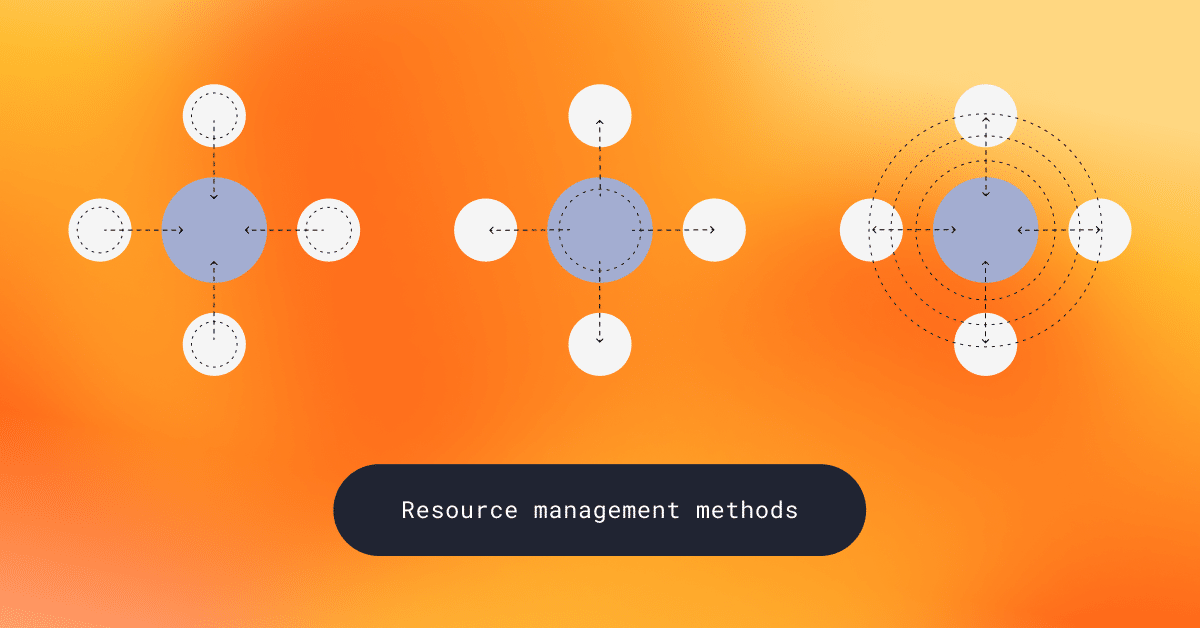
A resourcing model is the rule for who decides which people work on which projects. There are three. In a centralized model, one resource manager or small team makes every staffing call. In a local (decentralized) model, each team or department staffs its own work. A hybrid model splits the job: a central owner sets capacity, priorities and hiring, while teams handle day-to-day assignments.
If staffing calls at your agency happen across three Slack threads, a Monday meeting and one heroic spreadsheet, you already have a resourcing model. Nobody picked it. (Most agencies didn’t.) It grew one urgent request at a time.
Below, we cover how each model works, when to use it, how to spot that you’ve outgrown yours, and how to run it week to week. Parallax works with all three, but the choice comes first.
What We’ll Cover
- What does resourcing mean in business?
- What are the three types of resourcing models?
- Which resourcing model is right for your agency?
- How do we know when our resourcing model needs to change?
- How do you turn a resourcing model into a weekly process?
“What does resourcing mean in business?”
Resourcing is matching people to work: who is on which project, for how many hours, starting when. In an agency it also covers the calls just upstream of that, like whether to take on a new client, when to hire and when to bring in a contractor.
A resourcing model sits one level above all of it. It answers who makes those calls and where they get made. Same people. Same projects. Very different Mondays.
Getting it right is worth the effort. SPI Research’s 2026 Professional Services Maturity Benchmark, drawn from 509 professional services organizations, reports that Level 5 firms see 42% more billable utilization than Level 2 peers. Maturity covers far more than one org-chart decision, but it starts with knowing who owns which call. For the wider discipline, see our guide to what resource management is.
“What are the three types of resourcing models?”
Every model trades control for flexibility. Centralized gives you one view of everyone. Local gives teams speed and ownership. Hybrid tries to keep both, at the cost of some extra coordination. Here is how each one plays out.
Centralized Resource Model
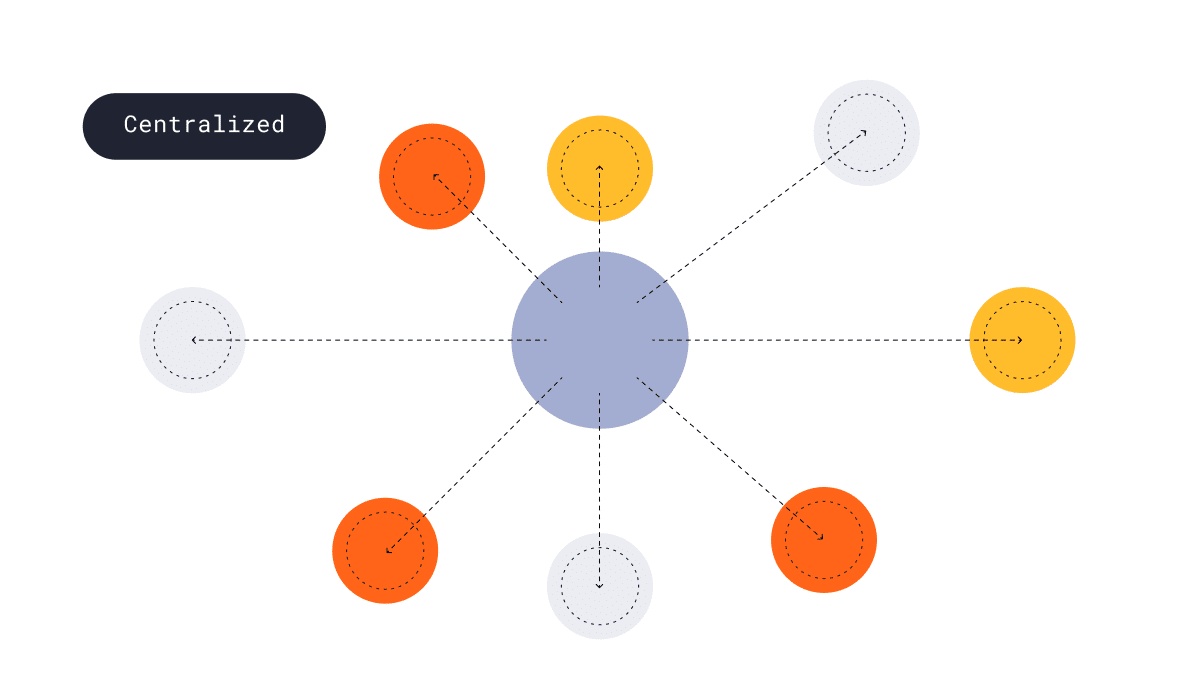
In a centralized model, one person or a small team makes every staffing decision. At a 40-person agency that is often a resource manager or the head of delivery. At 150 people it may be a full resourcing team. Either way, there is one owner.
Use it when utilization is uneven across the whole agency, when people get double-booked across departments, or when shared specialists (the one motion designer, say) keep getting pulled in four directions.
Advantages of the centralized model:
- One view of every person and project, so double-bookings show up early
- Easier to keep billable hours near target across the whole team
- Hiring and contractor decisions come from the full picture, not one team’s loudest week
- Better capacity planning, because every request lands in one place
Challenges associated with the centralized model:
- One person or team becomes a bottleneck, and a single point of failure when they are out
- Team leads have less say in who works on their projects
- Decisions can lag when the central owner lacks context on a client
Local Resource Model
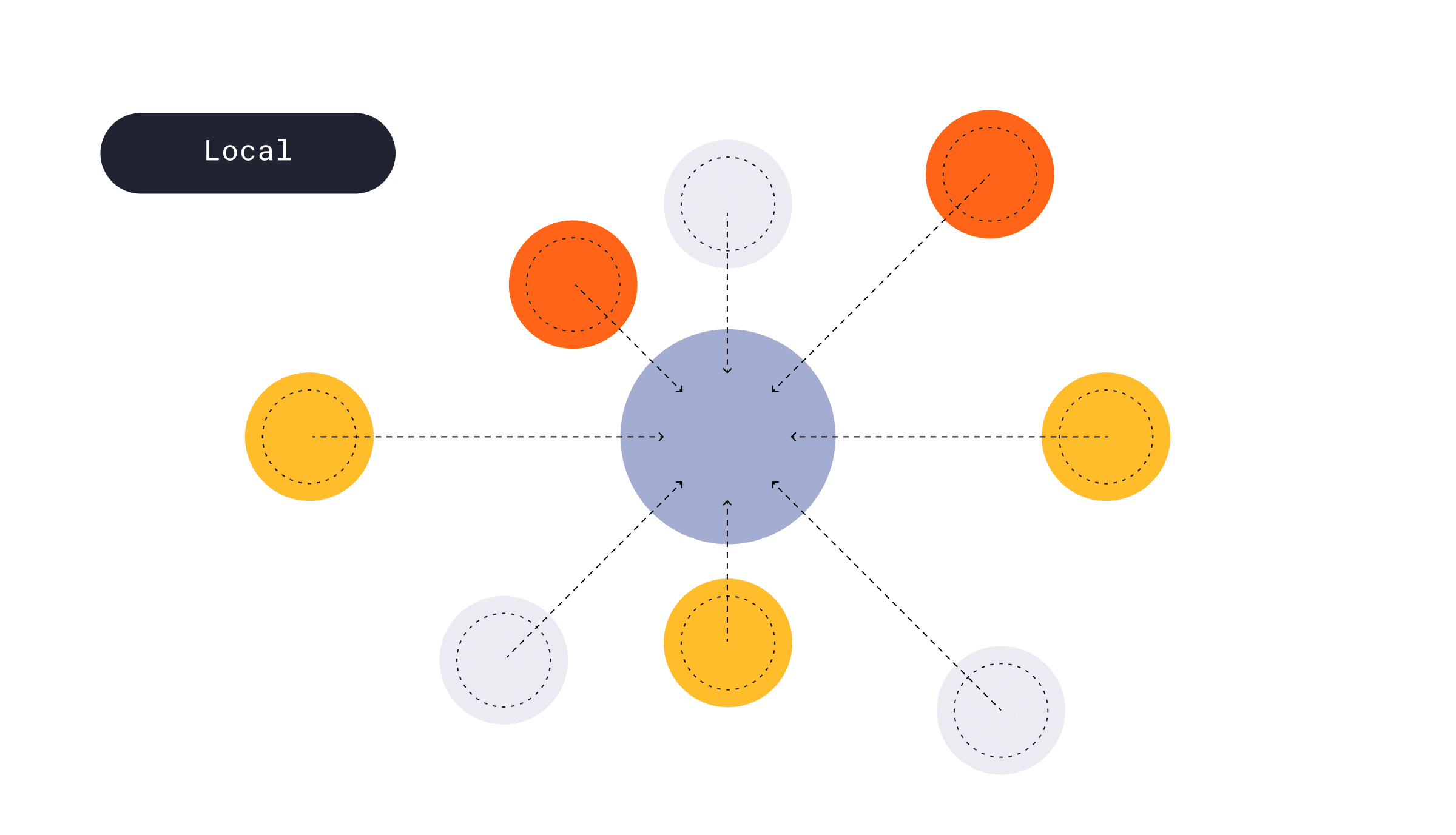
In a local model, also called decentralized, staffing goes to each team or department. Design staffs design work. Engineering staffs engineering. Each lead knows their people and their clients, so decisions happen fast.
Use it when teams rarely share people, when each department runs its own client relationships, or when the agency is small enough that every lead can see the whole picture anyway. Plenty of agencies start here.
Advantages of the local model:
- Decisions sit close to the work and the client
- Team leads own their plans, which builds buy-in
- One team’s problem does not stall everyone else
Challenges associated with the local model:
- Nobody sees agency-wide capacity, so one team can be slammed while another has room
- Each team plans its own way, which makes forecasts hard to roll up
- Shared specialists get claimed by whoever asks first
- Hiring calls tend to follow whichever team shouts loudest
Hybrid Resource Model
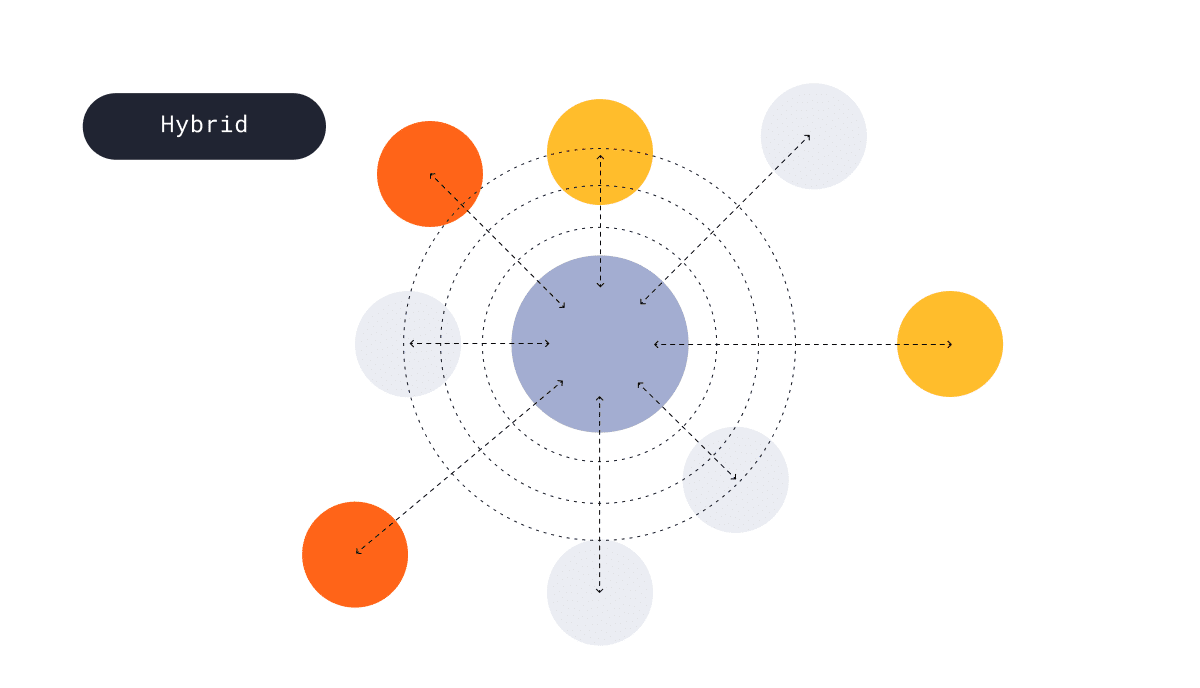
A hybrid model splits the job by decision. A central owner handles the calls that affect the whole agency: capacity targets, priorities between projects, hiring and contractors. Team leads handle the day-to-day, like who picks up which task this week or how to cover a sick day.
Making it work comes down to writing the split down. If the resource manager and a team lead both think they own the same call, you get two answers and one confused designer.
Use it when the agency has grown past the point where one person can know every project, but teams still share people across departments or offices.
Advantages of the hybrid model:
- An agency-wide view for the big calls, local speed for the small ones
- Fits agencies with several departments or locations
- Easier to grow into than a full move to centralized
Challenges associated with the hybrid model:
- Needs clear rules on who owns which decision
- Duplicate work and crossed wires when those rules are vague
- Less consistent than fully centralized, by design
“Which resourcing model is right for your agency?”
Size is the first filter. It isn’t the only one.
In smaller agencies, a local model often holds up because every lead already sees most of the work. Somewhere between 40 and 200 people, the strain starts. Projects multiply, people get shared across teams, and nobody can hold the whole plan in their head. This is where centralized and hybrid models earn their keep. Agencies with several offices or countries tend to land on hybrid, since local leads need room to make calls in their own time zone.
Beyond headcount, four questions do most of the sorting.
- How often do people work across teams? Often points to centralized or hybrid.
- How much of your work is fixed-fee? Fixed-price projects punish overbooking, so someone needs the full view.
- Who decides when to hire? If the honest answer is “whoever complains loudest,” that call needs a central owner.
- How far ahead do you plan? Team-by-team planning handles the next two weeks well and the next quarter poorly, which is why agency forecasts collapse beyond two weeks.
None of the three is wrong. The trouble comes from a mismatch between the model and the agency you are now.
“How do we know when our resourcing model needs to change?”
Models rarely break all at once. They drift.
Someone is consistently overworked while someone on another team is underused. The team feels at capacity, yet the utilization report says there is room. (Both can be true at once, which is part of the fun.) Hiring decisions get made after the pressure hits instead of before it. And the weekly resourcing meeting spends more time finding out who is free than deciding what to do about it.
Any one of these can be a bad month. Two or three together usually mean the agency has outgrown its model. Local models tend to show the cracks first, since nobody owns the view across teams.
“How do you turn a resourcing model into a weekly process?”
A model on paper changes nothing. Habits do. Four of them make it stick.
Name an owner for each decision
Write down who staffs a new project, who approves overtime, who calls for a contractor and who signs off on a hire. One line each. If two names fit the same line, pick one.
Hold one weekly resourcing meeting
Keep it short. Same day every week, with the people named above. Its job is to make tradeoffs while there is still time to choose. Our guide to the weekly resourcing meeting has an agenda you can copy.
Plan from one shared view
Every model runs better when everyone looks at the same numbers: who is booked, what is sold and what is likely to close. Spreadsheets can carry this for a while. Once someone has to rebuild one every Monday, they stop being a shortcut. Aim for a resource plan that holds up against actuals.
Look a quarter ahead once a month
Weekly meetings cover the next few weeks. Once a month, set pipeline against capacity for the next quarter. Hiring, contractor and pricing decisions belong here, not in a Tuesday scramble. Our guide to resource forecasting walks through it.
Where resource management software fits
Software does not pick a model for you. It makes whichever model you pick easier to run.
Parallax is resourcing and forecasting software for professional services firms. It reads the CRM and time tracking tools you already run, then puts sold work and open pipeline in one view of capacity, revenue and margin. Leaders see the risk weeks ahead, in time to move people or change the plan.
In a centralized model, one shared view is the resource manager’s home base. In a local model, it shows team leads the agency-wide picture they would otherwise miss. In a hybrid model, it puts both levels on the same numbers, which is most of what hybrid needs. If you want to see that with your own team and pipeline, book a Parallax demo. Whichever model you choose, the people stay the same. What changes is how early you see what is coming.
Frequently Asked Questions
What is a resourcing model?
It is the rule for who decides which people work on which projects, and where those decisions get made. The three common ones are centralized, local (also called decentralized) and hybrid. Every agency has one. Plenty just never wrote theirs down.
What is the difference between a centralized and a decentralized resourcing model?
Who holds the pen. In a centralized model, one resource manager or small team staffs every project, so someone sees the whole agency at once. In a decentralized model, each team lead staffs their own work. Decisions get faster, but nobody sees capacity across teams.
When does a hybrid resourcing model make sense?
Usually once the agency has outgrown one person knowing every project, but teams still share people. The central owner keeps the big calls: capacity targets, priorities and hiring. Team leads keep the weekly ones. Write that split down, or the hybrid turns into two models arguing.
Which resourcing model is best for an agency?
Headcount and how often people cross teams matter more than industry. Smaller agencies often do fine with a local model. Between 40 and 200 people, centralized or hybrid usually fits better, because shared specialists and fixed-fee work punish blind spots.
How do you know your resourcing model is not working?
Watch for the signs covered above. Someone is overworked while someone else sits underused. The team feels full while the utilization report says otherwise. Hires get approved after the crunch. One of those is a bad month. Two or three together point to the model.