KPIs that Matter: How to Protect Project Margins Amid Economic Uncertainty

We covered why utilization and project margin are the two most important KPIs that digital services organizations need to prioritize. Now, let’s dive a little deeper with specific tips on how to protect, and even improve, project margins. 

Economic uncertainty is causing business leaders to become more conservative with their resources. A looming recession, layoffs across tech sectors, and shrinking budgets mean digital services companies need to optimize their performance and maximize their resources without burning people out. It’s imperative to ensure sales and delivery teams are aligned on what it takes to deliver work profitably and to democratize project financial data so that delivery teams can manage projects proactively to meet financial targets.

In today’s environment, managing to margin and making sure that teams are executing profitably is key.

First, identify the root cause of poor project margins

Knowing that your project margins are lacking is one thing, but in order to improve them, you need to be able to identify the root cause(s) of the issue. There are three usual suspects when it comes to poor project margins: sales oversight, resourcing misalignment, and irresponsible project execution. 

Sales oversight: All too often, digital services companies become hyper-focused on sales and revenue growth, causing them to lose track of what it takes to deliver projects profitably. When this tunnel vision sets in, organizations tend to drive down their bill rate in an effort to win as much work as possible – and project margins will inevitably sink.

Is your organization prioritizing revenue growth over delivery quality and profit margins? Are you lacking visibility into what your forecasted margins will be for proposed projects? If so, sales oversight is likely the root cause of your poor project margins. 

Resourcing misalignment: We all know that the availability and capacity of team members can change in the blink of an eye in the digital services world. Let’s say a new project was priced based on a team you thought would be available, but when you get to the point of staffing the project, none of the junior staffers originally slated for the work have available capacity to take on the project. Your options are to leverage more senior staff with higher bill rates or leverage a contractor pool, which is almost always going to cost more than the junior staffers you originally had in mind.

Without adequate resource planning or visibility into current and projected availability of lower-cost resources, the costs will creep higher, and your project margins will take a hit. Sound familiar? 

Unrealistic project expectations: The first two scenarios showcase how project margins can be lower than targets without anything to do with project execution. Yet, almost always, poor project margins are blamed on the project management team. Even if the project was set up for failure, due to resource swapping and sales misalignment, it’s often the assumption that overages are a result of the project manager not running projects efficiently. My father taught me at a young age that golf wagers are won and lost on the first tee, where golfers negotiate strokes based on handicaps. The same can be said about negotiating your scope, budget, and bill rates before kicking off a project.

When projects are set up for success from a planning perspective, then the root cause of the issues may in fact lie with the delivery team. When the project team doesn’t have the appropriate tools to proactively monitor and manage project financials, project managers by default take on a “do what we need to do to get the project done” approach. It becomes more about trying to keep the customer happy and getting the project completed and less about paying attention to the economics of the project. The team burns out in the process and at the end of the project, the organization ends up losing money. 

Are you running into extensive project overages, regularly overworking the team, and exhausting all other resources for projects that were planned responsibly (i.e. responsible sales and resourcing)? Unrealistic project expectations are likely your root cause for poor project margins.

How to mitigate project margin challenges and improve operations 

After the root cause(s) impacting project margins have been identified, it’s then time to implement best practices across the organization to course correct. Here are a few tried-and-true practices that we’ve seen work well for digital services organizations to not only mitigate margin challenges but also to mature their operations. 

Build more rigor into the sales and resource planning process: Data from CRM platforms, or resource and staffing plans, often exists in silos. A consequence of this locked-up data is that sales teams seldom have visibility into the project backlog which impacts when and how the work they’re selling can be delivered. Delivery teams, on the other hand, lack visibility into the sales pipeline and struggle to balance workloads and make data-driven staffing decisions.

A more mature approach includes regular touchpoints between sales and delivery leads to look at sales pipeline data – so both have a clear sense of what’s in the pipeline and resource availability for upcoming work.

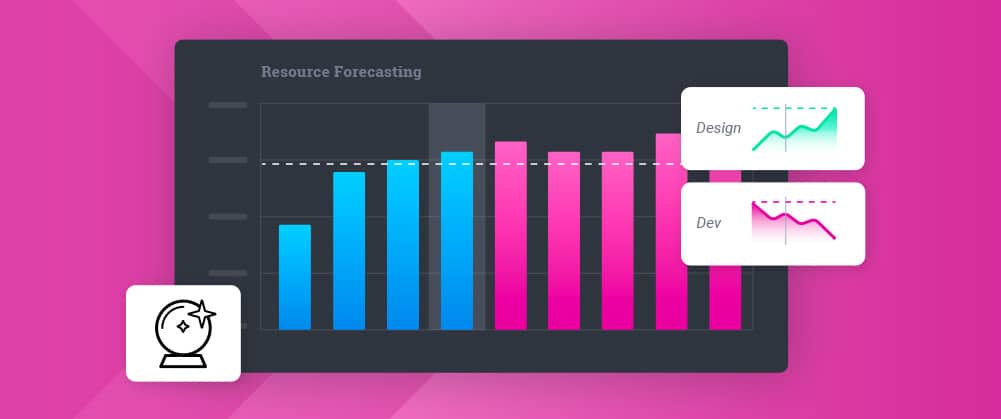
Parallax visualizes sales pipeline data alongside ongoing project data to help companies see projected hours against total future capacity. 

In order for the sales pipeline and resource forecasting process to be achievable, sales needs a simple way to attach high level resource plans to the deals they are pricing so everyone has a sense of what it’ll take to deliver work and meet margin goals. 

Parallax forecasts total revenue and costs for projects in the sales pipeline based on CRM data, allowing sales teams to ensure their sold projects will meet margin goals.

Parallax delivers more confidence, accuracy, and alignment for sales and delivery teams. By integrating with leading CRMs, sales leaders can leverage service offering templates as a firm starting point when pricing and planning new deals. And delivery and operations teams have a clear understanding of what’s being sold and can work proactively to earmark or assign the right resources – at the right bill rates – to execute the work, manage expectations, and meet margin goals. Parallax helps answer questions like: Who has the capacity to take on new work and who doesn’t? Which teams are already heavily utilized and which aren’t? Do we have the right mix of resources if we close the majority of our pipeline? 

Powerful insights from Parallax can inform resourcing and hiring decisions — showing which teams are overbooked and which have capacity.

Put project financials front and center: If your projects are planned with the right economics – with the right resources and for the right amount of time – then any challenges with project margins are likely going to be stemming from project delivery itself. If that’s the case, here are a few course-correcting steps to consider: 

  • Democratize project financials: Automate reporting around project burn against budget so the team has real-time visibility into the burn of in-progress projects. Better yet, leverage resource planning and project actuals together to forecast planned burn against budget in the future. With real-time reporting and forecasting for project financials, there should be no surprises when it comes to finalizing project financials for projects. Let’s say a project was scoped for $90K over three months, but after one month, the team has burned through more than half the budget. If this pace was unexpected, the lead or project manager then has the opportunity to reset and scale back with the team to better align with remaining budget OR proactively communicate with the customer to request a change order or an increase in budget. 
  • Incentivize fiscally responsible sales and project management: Sales teams and project managers have the greatest influence over whether or not projects are executed profitably. Create accountability in your organization for team members selling and managing projects. 
  • Dig deeper into delivery challenges: If overages continue, dive a little deeper and investigate where additional challenges may be lurking: 
    • Is it a certain offering where margins are low (website development, SEO offering, etc.)? 
    • Is a certain role within the team burning more hours than expected (engineering, UX designers, marketing strategists, etc.)? 
    • Are there certain team members who are consistently actualizing more hours than planned?
    • Are there variances in project margins with the different billing models (fixed fee vs retainer vs time & materials)?

Connect with Parallax 

What’s key to overcoming any of the challenges we laid out above is having a technical architecture that can provide greater visibility into the key metrics to the business so that the team is enabled to make data-driven decisions about the business. By using data and insights to understand where the problems are stemming from, you can then start to proactively address the inefficiencies and get margins back on track before they take a larger toll on company performance. This is how digital services companies mature their operations to effectively meet margin targets. 

Even more, being able to calculate and forecast these metrics is a foundational capability for digital services organizations. If you’re not able to baseline where your organization is performing in each of these areas today – or forecast where you expect to land in the coming months – that’s absolutely OK. And that’s why we’re here! Parallax is built to help you gain an understanding of where you are today so you can develop a game plan to get to where you want to be. 

Connect with us today to learn how some simple steps and connections across sales and delivery practices can help protect project margins – no matter the economic conditions. 

The Importance of Decoupling Resource and Project Management

In this article, we will discuss the importance of decoupling resource and project management in digital services companies to create more efficient processes and prevent burnout. We’ll explore the pitfalls of task-based planning and the advantages of implementing a duration-based approach.

Key Takeaways:

  • Task-based planning is difficult to scale and too granular for growing digital services companies, leading to inefficiencies and burnout.
  • Duration-based planning reduces context-switching time, saves costs, and eases timesheet stress.
  • Decoupling resource and project management leads to more streamlined operations, shared responsibility, and fewer surprises, enabling companies to scale more effectively.
  • Parallax, a resource planning tool, supports duration-based planning and helps project managers and resource managers collaborate for more successful projects.

There are a million factors to consider and align on when scaling a digital services company. Far too often, as these companies expand their teams, processes and systems quickly become fragmented and muddled. The work itself starts to feel more like a game of Tetris than a strategy.

The people who bear the brunt of fragmented processes are the project managers who are expected to be the central hub for the team, resources, projects, and individual tasks.

Project managers must balance resource and project management. They’re held accountable when timelines aren’t on track and are expected to have the expertise to understand how a project is progressing. They’re also on the hook for project health assessments based on the burn-down in tasks and the burn-down in budget. In other words, it’s a lot.

As a company grows, the combination of a traditional task-based approach for project management and resource planning leaves project managers with a next-to-impossible role. 

They’re expected to not only keep all the plates spinning within complex projects that often have hundreds of tasks or points (if not more), but they also have to figure out how to allocate human resources for future work. It’s simply not scalable.

How about—and just hear us out—we don’t break our beloved project managers? Let’s dive into our recommendations for successfully scaling your business without burning out project managers or anyone else within your organization.

Table of Contents

The Pitfalls of Task-Based Planning

First, let’s cover task-based planning and pricing. This is when teams break down each project into a series of tasks and subtasks and estimate how much time it will take people to complete each task.

They then assign a fee to each task based on the billable rate of the person assigned to it. Finally, they total everything up to determine the overall project budget.

This might sound standard, but in practice, task-based management is a dated approach that comes with various challenges for digital services companies.

It’s Difficult to Scale

In the early stages of a company, it’s easy to have a small group of people share the responsibility for a small body of work. Each person has a sense of responsibility, and everyone is pitching in when it comes to dividing and conquering the work. 

Shifting that responsibility across larger teams and more clients, however, can be difficult. Again, this leaves project managers to manage complex projects and tasks, while also figuring out future resourcing needs. It’s far too much ownership and responsibility for one role. 

It’s Too Granular

Task-based workflows are incredibly time-consuming because they focus on individual tasks at a granular level and in 15-minute increments of time.

When the client list starts to expand—or the project size starts to grow—there can be hundreds of individual contributors and a lot of overhead and time to rigidly manage if everyone’s tasks are tracked in small increments.

Plus, this typically goes against the grain of creative practitioners. Don’t expect them to happily bounce through hundreds of small tasks in 15-minute allotments with peak creativity for each.

It Doesn’t Account for Context Switching

It’s difficult for a project to land perfectly on budget through a rigid task-by-task approach, as it quickly becomes expensive for individual contributors to switch between projects. 

The often unexpected, unaccounted cost for context switching across six or seven different projects and clients tends to kill some of the time allocated for each task. Designers or developers, for example, might have to spend 15-30 minutes getting back up to speed when they switch from one project to another, and they’re doing this multiple times a day.

That time has to go somewhere. It’s either chipping away from their work time, or it ends up killing the budget. This forces teams to eat the overages (sacrificing margin) or increase client budgets. Neither is ideal.

The Solution: Duration-Based Planning

In place of task-based planning, digital services companies should implement duration-based planning. This is when a certain percentage of each role or a person’s time is allotted to client projects. 

Rather than assigning a certain amount of time for each task, duration-based management assumes the employee will spend, for example, 50% of their time on a project for client C and 50% on client D. 

The expectation is that the employee will complete all the tasks they’re responsible for during that time, and communicate with their manager or project owner if they need a longer window. Project managers can still manage the individual tasks or points that need to be addressed and completed, but budgets are not dictated based on the roll-up of the small allocations of time across all of these individual elements.

We highly recommend that people only work on two or three clients in a day, otherwise they’re too easily bogged down by checklists and short-sighted tasks that break the budget. 

Say someone is assigned 30 tasks (or points), and the sum of the hours on all those items is 200 hours. That person has 200 hours of billable work to complete within perfectly timed tasks that are aligned with the budget. 

Again, what about the time it takes for context switching? Where does this person put the time it takes to ramp up on each new task if they’re juggling more than two or three clients? That extra time impacts the budget.

However, with a duration-based planning approach, companies significantly reduce context-switching time. They can start being more thoughtful about how time is spent—and ultimately set their teams up to win.

Additional Benefits of Duration-Based Planning

There are other benefits of the duration-based approach beyond cost and time savings. A large portion of today’s workforce is feeling burnt out. This feeling is exacerbated within digital services companies that often have an always-on mentality. 

Essentially, everyone is working way harder than they should be, but it’s not always reflected in their timesheets. Developers, designers, and other individual contributors could be feeling overworked and stressed out, yet their billable utilization could say 60%. 

With a task-based approach, these individuals are likely to hide time to avoid the backlash from project managers for going over the allotted time and budget. It’s a lose-lose situation for both the contributor and the project manager. This type of environment eventually impacts a company’s attrition rate. However, a duration-based planning approach can help ease that timesheet stress.

The Importance of Decoupling Resource and Project Management

Duration-based planning is a step in the right direction, but digital services companies should also be decoupling resource and project management. They should sell and plan work based on duration, not tasks, and create more checks and balances as projects are in flight to set project managers up for success and help teams stay on track. 

When these two operational elements are conflated, teams become heavily reliant on the project manager, expecting them to be a unicorn who can estimate time and budget for the work and hold people accountable to those estimates. 

Unfortunately, there’s rarely a discussion at the end of the week to assess how many tasks are left versus how much time and budget is left in the resource plan. If those weekly checkpoints don’t occur, there are often surprises as projects wrap up.

For example, you may find that teams are frustrated, budgets have been blown, or deliverables have fallen short. On the other hand, a micromanagement approach to ensure everything and everyone is on track is not sustainable for project managers or scalable for the business. Strong talent will burn out quickly, and employees will likely search for a new role or a new company sooner rather than later. 

An Example of Decoupling Resource and Project Management 

Here’s what it can look like when project management and resource planning are decoupled. The project manager sets expectations for three team members to work 50% of their time on the project from date A to date B. 

There’s a clear expectation and agreement that these team members can complete their tasks in that period of time. The project manager checks at least once a week to see which tasks are completed and which tasks are coming up. They will also regularly assess if the tasks left are reasonable for the time and budget left. 

This checks/balances approach essentially creates a mechanism for greater visibility and consistency, shared responsibility, reduced tension, and fewer surprises. Ideally, there would also be someone (i.e., a resource manager) for the project manager to partner with who can own resource adjustments for the project as needed, so the project manager can remain focused on the project itself. 

With this approach, digital services organizations can scale easily and start to operate at a more mature, streamlined level that doesn’t break their people. To do this, you must adopt a duration-based project approach and decouple project management and resource planning

Improve Project Management & Scale Your Business With Parallax

We’re passionate about this because we’ve lived it. We believe duration-based planning is a best practice for operationally mature organizations. Duration-based resource planning helps teams stay focused on a few projects at a time while delivering more value to clients. As a result, resource managers can easily visualize resource allocation and project managers can deliver more value. It’s truly a win-win.

While Parallax supports various pricing and agency resource management methods, our solution works especially well with duration-based planning. Resource planning features allow teams to assign a percentage of each employee’s time to a project. This makes it easy to visualize resource allocation. 

At the same time, project managers can continually watch for shifts in project variance by looking at projected start and end dates, the burn-down in tasks, and the estimated time to complete the projects. If things start to get off track, project managers and resource managers can act quickly and strategically, together. 

Are you looking to scale with ease? Do you want to create an environment for your workforce that has less friction and more success? Parallax can help. Book a free demo today!

Embarking on a Software Evaluation? Leverage These 6 Pillars from the Outcome Chain Framework

person walking up a chain

We all lean on technology both in our personal and professional lives to solve problems and make life easier.

It’s everywhere and part of everything, from finding the perfect app that allows you to better track your budget or organize your recipes, to implementing a new system or adopting a new platform that will streamline processes and increase revenue. Whatever outcome we’re reaching for, it’s well understood that technology can help get us to where we want to be.  

Selecting enterprise technology, however, holds much more weight than stumbling upon a new app. Even as the volume of technology purchases increases every year, many buyers are getting important elements of the evaluation process wrong. You might think practice would make perfect, but data shows that’s not the case—most organizations aren’t doing a great job of thoroughly evaluating software, and they’re missing the mark on the solution that best suits their needs. 

According to Gartner, 48% of technology purchases are ad hoc, meaning the team’s requirements and objectives are not well understood, and another 52% of technology purchases are either canceled or abandoned before they get off the ground. Worse yet, only 20% of buyers achieve a high-quality deal and feel strongly that they did not have to compromise their ambitions.

These numbers are bleak, but frankly, they’re completely avoidable. When you better understand and align on the outcomes your organization is truly reaching for, the evaluation process for a new solution becomes infinitely easier (and even kind of fun).  

Introducing the ‘outcome chain’ framework

At Parallax and in past lives, we’ve made our fair share of technology purchase decisions. Plus, we are – after all – in the technology business, so we’ve learned a thing or two about the key questions and considerations you should think through before you make a large investment in a new solution for your business. At Parallax, we subscribe to the ‘outcome chain’ framework, originally developed by the Technology & Services Industry Association (TSIA). It’s a methodology that enables effective outcomes engineering, which is focused on consistently helping customers achieve targeted business outcomes at scale. This, of course, requires a complete understanding of what’s required to achieve a specific outcome, which is defined in the outcomes chain. The same concept applies to buyers evaluating software—they should be aware of what’s truly required to achieve the outcomes they’ve identified as well as the outcomes that providers are promising throughout the sales cycle. 

Yes, it’s essential to understand what a platform or solution can do, but what else needs to be done? What other operational changes need to be implemented in order for the solution to perform? Say an organization’s main objective is to increase their utilization by 5%—to achieve desired results, this will almost always require more than just a software purchase.

Laying everything out in an outcome chain framework provides structure to the evaluation process, ultimately helping buyers and their providers identify the key ingredients required to successfully deliver the right outcomes. 

Putting the outcome chain methodology to work 

There are several different elements of the outcome chain framework to think through and document when evaluating different systems and solutions. Let’s dive in! 

  1. Outcome: To avoid embarking on a journey where the path ahead is unclear and the requirements for success are unknown, it’s essential to first identify and capture what outcomes you want to achieve and what’s required to achieve them. Are you focused on improving utilization? Increasing project profit margins? Achieving scalable revenue growth? Align on the intended outcomes, then have these conversations with your potential providers as well. They also need to have confidence that the holistic plan is attainable and that everyone understands the elements that might need to shift or evolve so that the solution can deliver on its promises. 
  2. Financial Impact: What benefits is the solution going to provide, and what’s the expected financial impact of those benefits? The financial impact is tied directly to the outcome. How much is this going to cost? Do other required operational changes have an associated fee? Answering these questions is how you establish the expected ROI.
  3. Operating KPIs: Once you’ve aligned on intended outcomes, you need to establish the key performance indicators (KPIs) for tracking against them. These are the early indicators you’ll use to understand your likelihood of achieving your goals. What systems or reports are we going to use to track our progress? What other factors will impact our likelihood of achieving our goals? How can we measure and monitor those additional factors? What metrics matter most? When you establish answers to these questions in your evaluation journey, you’ll always be prepared to answer stakeholders’ questions throughout the implementation process. 
  4. Practices: Other day-to-day practices that might need to shift when a new platform is adopted are often overlooked, and that needs to change. What processes and best practices will need to be adopted in order to effectively leverage the software? How big is the gap between what we’re doing today, and what is required to achieve an outcome? What support am I going to be provided in establishing new processes? Who’s accountable? This is all part of creating a holistic solution in order to achieve outcomes. 
  5. Technology: Though easier said than done, it’s important not to get distracted by one-off features and functionalities that aren’t relevant to your outcome. In other words, focus is key. What technology needs to be implemented to achieve the outcome? What’s included with the solution but isn’t required to achieve the value you’re pursuing? Am I disrupting a process that doesn’t need to be disrupted? How much change management is required? While more features could sound like a good thing, it’s important to consider the resources you will need to invest in adopting those features (i.e., training, change management, data migration, risk mitigation). When in doubt, remember that the simplest path to an outcome is most often the best path. 
  6. Roles: The people component of any organizational change cannot be forgotten. Who needs to be involved? What changes will be required for my people? Will there be resistance? The solution needs to speak to the strategic goals that leadership is focused on, but it also needs to consider the logistical, operational requirements of the teams using the technology day in and day out. A rip-and-replace approach, for example, might not be the best option if teams are passionate about their current tools. Instead, the business might want to consider a solution that integrates with existing systems and that can 1) still achieve outcomes and 2) doesn’t cause widespread, unnecessary disruption and frustration across the organization. 

Let’s connect!

We understand that evaluating different tools and technologies for your business can feel overwhelming, confusing, and time-consuming. But with the outcome chains framework, those stressors go away. It’s a helpful approach that should be leveraged when making any software decision as it supports teams in covering and considering every aspect of the process so they can achieve their outcomes with ease. 

That’s why we use this same philosophy and approach when we partner with customers. Because adopting a Professional Services Automation solution is all about driving business outcomes – like better revenue, increased margin, and strategic growth. When you partner with Parallax, you not only get a powerful PSA solution built to meet the unique needs of digital agencies, marketing, and software development firms, you get ongoing access to a team of industry experts who are committed to helping you achieve the outcomes that matter to you. We’re there to support you every step of the way, probing you with important questions and ensuring that no stone is left unturned when making big decisions that have great impact on your business. 

“I must also say that working with the people at Parallax during implementation was a great experience. The team was informative and responsive. Because of Parallax’s consultative approach, I feel we got more than a tool — we have really initiated a major business transformation.”

Interested in learning more about the outcome chain approach? Have questions on how the process works? Get in touch with us! We love having conversations like these because they help your team focus on what’s important today while laying out the framework for new decisions, programs, or tools that’ll make a difference tomorrow. 

The Shape of Projects to Come – Accurately Forecasting Resources and Revenue

“The Shape of Things to Come” is a work of science fiction by H.G. Wells and for some digital services firms, accurate forecasts of future resource needs feel like a work of science fiction as well.

At Parallax, we view resource requirements for individual projects as having a shape. Think of a line graph that plots the resources needed over time. Early in the project, design resource usage is high and then decreases a bit as development resources ramp up. While spreadsheets can do a decent job of tracking individual resources, current assignments and future availability relative to booked projects, adding forecasted sales into the mix is the alien in the room: something scary and unknown.

The most successful digital services firms put effort into adding more fidelity to the pipeline earlier in the sales process rather than later. However, for most organizations, resource forecasting relative to deals in the pipeline is based on a weighted revenue forecast coming from their CRM, not a resource plan. Fidelity requires including potential resource plans, i.e. resources over time with specific allocations. It also takes time and effort which is sometimes viewed as not justifiable early in the sales cycle when the probability of closing the deal is still low.

With Parallax, sales people can easily forecast projects in your CRM based on predefined service offerings that include an additional level of detail – the types, amounts, and timing of resources required to complete a specific type of project. These templates, or project shapes as we call them, represent the most common service offerings and are informed historical projects. Using templates to forecast projects results in more consistent and accurate project estimations.

These details not only result in more accurate resource forecasts, they give salespeople the information they need to have meaningful project scoping conversations with prospects earlier than the competition. Based on these conversations, the salespeople can consult with technical resources and solutions architects to adjust the “shape” of the projects when they’re in the pipeline which allows for more accurate forecasting and proactive resource allocation when the deal closes. This detail also provides much better insight into the impact of each opportunity, not just from a revenue perspective, but from a profitability perspective as well.

Once a project is in flight, the actual resources used rarely reflect the resource plan developed at the beginning of the project. The shape of the project shifts and changes as the work progresses. Some types of resources may have been underestimated, others overestimated. In an agile environment, the project scope may change as the details are better understood. Parallax allows resource and project managers to dynamically adjust the shape of active projects, giving greater visibility into resources that may be freed up earlier for other projects or additional resources that may be needed later on to complete the work. 

At the end of the day, digital service organizations need the answer to two key questions. Do we have the backlog of work and team required to hit our revenue targets? And how confident are we that our current revenue projections are accurate?

To answer these questions requires layering the shapes of active projects to build an aggregated resource plan and then going beyond that to layer on the shapes of forecasted projects to understand resource requirements going forward, no easy task without a solution like Parallax. Also, updating and refining the shapes of active and forecasted projects is a dynamic process. Successful organizations typically refine higher probability deals (>50%) in the pipeline on a weekly basis as conversations progress with clients and as close dates become imminent. 

Resource and revenue forecasting are not alien concepts to Parallax, it’s one of the purposes for which it was built. It helps organizations evolve resource planning from a function to resource forecasting as a way to successfully manage and grow the business.

The Problem with Task-based Proposals

Success requires continuous improvement. This is especially true in the solutions architecture and sales leadership roles I’ve held and led in the custom software development industry.

In these roles, I’ve evolved an approach and point of view on how to tackle a range of challenges. Some ideas I’ve kept, refined, and instilled in others. But a few tactics have dropped off along the way. One of them is the detailed, task-based proposal. Read on to find out why.

What are they?

Love ‘em or hate ‘em: task-based proposals often mimic a statement of work, including aspirational descriptions of each major feature to be built, verbose details of each task the team will perform (often chronologically), carefully-worded limits and constraints to manage budgets and timelines, and, the king-pin of this approach, a long table or list enumerating all of these features and tasks with each associated hourly or cost estimate. The proposed cost of the project is simply and clearly calculated from the sum total of this list.

Task-based proposals are deemed necessary and successful for a few reasons – the descriptive content speaks directly to the perceived needs of the customer; the 1:1 correlation of task to line-item justifies the proposed budget; the volumes of technical and procedural language can deflect objections to technical credibility and expertise. To be fair, for smaller shops where delivery practitioners also do sales discovery and write their own proposals, this style of proposal can be effective! But let’s acknowledge why – there isn’t a hand-off event that triggers re-evaluation of the proposed work.

There are drawbacks, too. Selling on tactical deliverables will seldom set you apart from the competition and will incentivize price shopping. It’s a slippery slope to commoditization from there. Prospective clients will compare apples-to-apples and make a la carte selections. They will get caught up in technical debates on specific, minute details of a proposal. Specific tasks will get cut to win the deal, creating a rift between sales and delivery as the latter realizes their time is being undercut or undervalued. Or, to hedge against risk of the unknown, every estimate is inflated – first by sales and again by delivery, meaning your ability to execute a client’s goal within their budget will be sabotaged by artificially padded budgets.

As sales practices grow, the precision required in detailed proposals is all but impossible to achieve. You either need to slow down the pre-sale process and do more free discovery with tactical practitioners to validate the work, put too many caveats in the proposal, or continue to mitigate risk by padding budgets. Even with padding and caveats, each hand-off event is going to resurface skepticism, triggering (re)evaluation and, you guessed it, more line-item padding and more caveats.

Why should we abandon detailed proposals?

I believe the root issue is that humans are just pretty bad at estimating time, and that delegation at hand-off rarely goes well with this pricing method. Pitching work (let alone executing it) under a task-based proposal does little to fortify your consultancy’s unique value or promote creative, innovative problem-solving. If teams are so boxed in to spend only small amounts of time on predetermined tasks and deliverables, they’re encouraged to prioritize time over quality. Unaccounted time for context switching and draconian project management will invariably kill budgets and margin. Plus, a delegation based on tasks – not of the ultimate outcome – can lead to major changes in scope after hand-off once technical practitioners dig in to solve a problem.

Here’s one (slightly fictionalized) such example; one of several similar anecdotes I’ve witnessed:

Limited discovery and poor hand-offs, at scale, leads to re-evaluation of EVERY task

Charles*, the CEO at Some Fictitious Agency* (*names have been changed to protect the guilty) has grown his firm aggressively and has a sales team dedicated to growing new business. The sales reps are ambitious, and they each rely on their favorite members of the delivery team to help review and estimate work. They’re cranking a dozen or more detailed proposals each month now; more than Charles can keep track of!

Charles gets an email. It’s from a new client, one he hasn’t met yet. This client is livid.

“What kind of bait and switch is this? Your sales team told me everything I wanted to hear, and I even signed a proposal that’s higher than my budget because of how good you say you are. We’re barely 2 weeks into my project, I’ve already paid 50% down, and you’re telling me it’s gonna cost 50% more than planned?? I want my money back.”

What the heck happened? Charles pulls together an 8am meeting with the rest of the team to review.

As expected, the sales rep had consulted with a qualified designer and a strong lead dev in the sales process. They spent a week crafting a 6 page proposal, including a line item list over a page long with everything they expected the project team to do. The client saw this, was impressed, and signed off on the project.

The project kickoff was scheduled, a team was resourced, a PM was assigned, and the sales rep handed off the project to the new team. The original estimation team was there, too. Seems fine, right? Well, kinda. The sales rep spent the kickoff meeting hyping up the project to the new team, and the lead dev who estimated it spent time justifying his estimates and validating his project plan. The new team tried to absorb it all, but at the end of the day, all they had was the page of line items from the proposal and a high-level understanding of the project.

As the PM worked with the team to write tickets and build the backlog, they re-estimated each task. The new team, in order to assuage their uncertainty, added a few hours to each task so they could figure things out as they went. With over 50 line items on the proposal, that small padding on each one added up – fast! Detailed proposals and task-based project plans like these commonly fail because they encourage micromanagement through a dictated list of small jobs and don’t focus on the final outcome desired for customers. At scale, it’s increasingly difficult to build a detailed plan in the limited time available during a sales conversation. Teams compensate by inflating budgets to offset the risk of the unknown. Each time the project plan is re-evaluated or handed off, this risk mitigation strategy is re-played and budgets swell leading to difficult situations when scopes suddenly change.

Define and protect your unique value with a different approach to pricing

At Parallax, we’re big fans of value-based pricing. This method moves away from selling tactical deliverables (which does little to set you apart from other shops) and focuses more on the unique value[1]  and problem-solving approach. Hand-in-hand with this philosophy is scoping work based on duration, not tasks. This method allocates portions of your team’s time to particular projects and doesn’t force anyone to specifically track each task. The final outcome and value you’re delivering to clients is what’s important. With this philosophy, the sales team knows the delivery team is working hard to solve clients’ problems. Delivery knows that sales is working to position them to deliver the most impactful work. Teams communicate, culture improves, and the business secures more good work. With duration-based proposals, pricing is more accurate, hand-offs are more pleasant, utilization improves, and delivery is focused on the value and the final outcome for customers, not individual tasks.

While Parallax supports multiple pricing and resource management methods, our tool works especially well with this method and enables duration-based resource management. It’s easy to assign a percentage of time to each employee’s time and visualize or forecast allocation across teams, projects, and departments. We can help you standardize your offerings with our “shapes” tool to quickly spin up projects based on common patterns from your most repeatable services.

Ready to learn more?

We’d love to talk to you about putting task-based pricing behind you to help your team do their best work. In the end, the more mature your consultancy becomes, the less task-oriented it should also operate. Duration-based pricing is a more efficient model that empowers employees and keeps everyone focused and on track, with clients seeing the true value of your partnership and team. That’s a win-win in my opinion.

Improving Employee Engagement: Maslow’s Hierarchy of Needs

While it’s critical for leaders of digital services to focus on business growth, they must also address the fundamental needs of their employees. This is the only proven method for improving employee engagement.

In this guide, we explain how leaders can do it all by harnessing the power of Maslow’s hierarchy of needs. We cover the five categories of Maslow’s model, including physiological needs, safety, love and belonging, esteem, and self-actualization.

We also discuss how each of these categories can be applied to create a strong culture, drive team engagement, and recognize employee performance.

Here are five key takeaways from the article:

  1. To motivate your team to reach their full potential, it’s crucial to focus on the needs of your business and the fundamental needs of your people.
  2. Maslow’s hierarchy of needs outlines five categories of human needs, from physiological needs to self-actualization, with higher needs emerging only when the more basic needs are met.
  3. At the foundation, make sure the basics are covered, which include providing fair compensation, setting clear goals and expectations, and ensuring job security.
  4. To create a strong culture, it’s important to help people feel connected to your company’s purpose and mission and establish ways for people and teams to feel connected.
  5. Finally, driving esteem and meeting the need for recognition, respect, and freedom, as well as creating opportunities for people to realize their full potential, can help individuals become their best selves.

Table of Contents

The Importance of Improving Employee Engagement

Digital services firms, much like the people who run them, are on a continual journey. We want our companies and our teams to be the best versions of themselves and to grow and evolve.

We want to motivate our people to reach their full potential and for our teams to achieve results. Getting there certainly requires a focus on the needs of the business, but also the fundamental needs of our people. One can’t grow without the other. But finding a balance between these two is easier said than done.

As many leaders navigate aggressive business growth, there’s also a perceived tension that culture and people-building will suffer as growth is emphasized. Small and tight-knit teams may feel that prioritizing business growth and meeting performance goals comes at the expense of the cultures they helped create. 

Individual contributors may also lose sight of their own value and opportunities for development as the companies they joined early on begin to grow. Previously engaged employees may no longer feel a strong connection as companies evolve—or as they change themselves.

It’s well documented that strong and engaged teams drive business performance, so it’s important to understand what our people need. This is critical to improving employee engagement, especially given the unprecedented change and growth in the digital services industry. 

There are a lot of leadership frameworks and models out there, but my favorite is one of the classics: Maslow’s hierarchy of needs.

What Is Maslow’s Hierarchy of Needs?

Maslow’s hierarchy of needs is a foundational concept of Parallax’s culture and vision, as well as how I shape and continue to evolve my approach to leadership, motivation, and team building. 

Human needs can be broken down into five categories, from physiological needs to self-actualization, and the higher needs emerge only when the more basic needs are met. 

Let’s be clear: Maslow’s model of how people achieve self-actualization to be their best selves is about a lot more than who those people are professionally! But I think the idea is effective at helping people become their best work selves and to realize their professional potential and career ambitions. 

After all, we spend a lot of our lives at work, and we yearn for both professional and personal fulfillment. Heck, it’s called “earning a living” for a reason. Our professional lives should mean something! 

Plus, I believe Maslow’s model is an effective way to think about leading, motivating, and evolving both businesses and the people who run them. Let’s break it down.

Improving Employee Engagement: Start With the Basics

The foundational layer of Maslow’s model is about survival. People need shelter, food, and transportation for themselves and their families. And to acquire those things, they need a fair wage for their work! 

If people are secure in their finances, they can focus on everything else. On the other hand, if they’re distracted or worried about bills, they’re less effective. So it’s important to pay people fairly and to make sure the “contract” between employee and employer is fair and understood. 

This means being clear on salaries, how they’re set, and how people can earn more as they grow.

The next layer, safety, is about helping employees feel secure in their jobs. That means setting clear goals and expectations. Another baseline distraction you should help your people avoid is the fear of being “blindsided” and fired one day out of the blue due to performance issues they weren’t aware of. 

Make sure individuals know what’s expected of them and if they are meeting those expectations early and often.

These two baseline needs are often either misunderstood, miscommunicated, or not communicated at all by all leaders. But in Maslow’s model, it’s critical to get these right first to get to the fun part of helping people excel and thrive.

Creating Belonging and Connection

In the middle of Maslow’s hierarchy is the need for belonging and connection. To me, this is about creating and nurturing a strong culture and making sure people align with the values of an organization. 

Make sure the values and purpose of your company are both known and reinforced. And establish ways for people and teams to feel connected to your purpose and mission.

At the end of the day, culture and belonging are important to the human AND the business. Engaged employees will feel fulfilled, respected, and nurtured–and businesses will excel with engaged and committed teams.

Rewarding and Recognizing

The next layer is about driving esteem and meeting the need for recognition, respect, and freedom. In a professional sense, I believe this is about recognizing and rewarding people for their performance while also helping them create real impact. 

During times of growth or evolution, impact is about helping people shape the future of their careers and the organization. As people move up the ladder of needs, they’ll seek not only recognition but also influence. 

Lead and motivate teams so they understand their impact on the organization today and how they can influence the future of the firm.

Self-Actualization: Reaching Your Full Potential

The top of Maslow’s pyramid refers to the need to be your best self and the reaching of your full potential. It may elicit eye rolls as academic bullsh*t jargon, but I truly believe that meeting people’s needs, from the most fundamental to the need for recognition, can bring out their absolute best. 

The peak of Maslow’s model is about helping people realize their talents, contributions, or potential, both personally and professionally. Great leaders nurture and guide people to be their best selves and help them follow their passions. 

But they also know that for people to reach this point of fulfillment, their other needs must be met, including the most fundamental ones.

Maslow’s Hierarchy of Needs Applied to Employee Engagement

The digital services field is full of growth, evolution, challenges, and change. An unintended consequence of this dynamic environment is that achieving business success can often come at the expense of focusing on personal growth and culture building for teams—or so it would seem. 

Organizations need to be both smart and healthy to be truly successful. Smart means understanding the economics of the business: market dynamics, trends, financial performance, the competitive landscape, and more. Healthy means building a cohesive team characterized by trust, interdependence, solid relationships, and a strong culture.

Maslow’s model shows that addressing the fundamental and aspirational needs of people will create healthy, committed, and high-impact teams. Those strong teams whose needs are met, in turn, will drive business growth and help your organization reach its highest potential.

Learn How to Improve Employee Engagement With Parallax

If improving employee engagement is a priority for you but you’re not sure how to get started, we recommend starting with an assessment to gather meaningful feedback from employees and to get a pulse on where your firm is currently at.

Download our free Employee Satisfaction Survey template so you can check the pulse of your employee engagement and gather meaningful feedback.

We’re Here for You, Project Finance Team!

Ah, the plight of our fellow project accountants. They have an (almost always) thankless job, but also one that’s critical to any digital consultancy’s health and performance.

These folks are responsible for going deep on data. They assess profit margins, compare trends across teams and services, forecast costs and revenue, and work to keep teams on track and budgets balanced. And they continually collect and send this detailed reporting to management, finance, delivery, sales…the list goes on.

Ever data-driven and analytical, they’re responsible for collecting and reporting across a number of KPIs to keep track of business performance and forecasting. Then, they’re at the center of conversations that are more existential in nature, too, sparking questions like: Are we selling correctly? Are we resourced appropriately? Are we delivering on plan and on budget?

The project accounting point of view is not only critical in answering these questions, but in providing data to inform decisions. And I’m here to tell you it’s HARD work!

Stuck in the status quo

The vast majority of these pros are managing all of this tracking and analysis with manual, cumbersome spreadsheets that are not only prone to human error, but are time consuming to produce. Once this static data is finally captured, populated, and reviewed, it’s probably out of date by the time it’s even reported. (Read more on why spreadsheets are a bummer).

What’s more, this time consuming and manual data entry forces these experts to work reactively and in the past, and it inhibits them from proactive forecasting and assessing business performance for the future. In other words, a lack of visibility into performance for tomorrow creates a lack of action today in this manual world. The struggle is real!

No one wants to live in the past and work in a reactive-only mode. But it’s this manual approach to financial tracking that keeps us stuck in an outmoded method. Being bogged down looking at actuals prevents project accountants from providing actionable guidance to heed off issues early. It reduces an ability to provide smarter and more accurate forecasts that can inform business decisions and assess overall project health. It limits insight.

Let’s be honest: Managing a digital services consultancy is operationally very challenging, labor intensive, and time consuming. This status quo approach is preventing project accountants from working smarter and more strategically. But there’s a better way.

Drive proactive, real-time reporting with Parallax

The beauty of Parallax is its ability to easily integrate the tools and platforms you’re already using to provide better visibility into project finance and overall business performance. Through a project accounting and finance lens, this solves two issues:

First is the labor-intensive tracking and reporting needed to assess project and team health. All the complex spreadsheets, time-consuming data entry, hours of validation and reporting? They’re a thing of the past! Info is available real time and it’s accurate. It doesn’t rely on manual data entry either. Parallax inputs real data from the real tools your teams are using for more instant visibility into project costs and revenues – with the ability to work across a number of billing models including variable rate cards, time and materials, fixed bid, or retainers.

Parallax also empowers project accountants to work more proactively and strategically. It enables better business analysis to help companies run more efficiently by integrating data from CRM, time management, and delivery platforms. With instant, reliable, and accurate access to project P&L and financial charts, project accountants can help adjust resources or re-align project goals and expectations – before it’s too late and there are concessions or change orders on the way.

Want to learn more?

Whether it’s your sales, delivery, operational, or accounting staff, we believe that Parallax can unlock the potential of your people. Giving them the right tools to succeed allows them to spend more time doing higher-value and more gratifying work.

With a more proactive approach through reporting and project forecasting, digital services shops can run healthier and happier. Project accountants can easily understand and report on business performance across projects and teams, and they can move away from frustrating, time consuming, and reactive reporting struggles. They get the visibility needed to overcome this reactive-only reporting and free up the time for better and smarter business forecasting.

Hey, project accountants! Go deeper on Parallax and tune in to a live demo on delivering more actionable, proactive reports.

5 Reasons your Spreadsheets are Holding you Back

When you first started your digital services company, you likely began building spreadsheets to collect data in a way that represents how you think.

These homegrown tools are a great place to start as you are getting your business off the ground because at this point, you’re small (and smart!) enough to be able to wing it and count on your team’s gut instinct to make early calls.

You’re probably reading this post right now because you realize that as you’ve continued to grow, your homegrown tools are starting to become too clunky, cumbersome, and complex to manage. This can be due to a host of reasons (more on that, below), and ultimately result in your team becoming reliant on a network of spreadsheets that require you to continuously piece together (and fix!) disparate data sources to meet your growing needs for sales forecasting, capacity planning, and revenue forecasting.

Not only does this homegrown spreadsheet solution eat into the time your limited resources could be spending on your craft (the billable work you love to do), it also becomes a burden and adds risk to the growth and evolution of your business.

Here are 5 key reasons your spreadsheets are holding you back from growing and evolving your digital services company, and what you can do about it.

1. They require manual effort to maintain

Everyone can agree that spreadsheets are hard to maintain, requiring a lot of manual effort. Even though correctly inputting data into different sheets is a time-consuming, error-prone process, it can still produce valuable insights, especially when the business is smaller, less complicated and doesn’t require a lot of data to work with.

The challenge comes as you continue to take on new and exciting work. The manual effort required to maintain your homegrown system of spreadsheets will start taking up a lot more of your time than it used to. More time from your team members needing to constantly check for data accuracy, ensure macros and formulas are correct, fix broken links, search for and piece together disparate data from multiple disconnected systems – all of which eats into the time they could be spending on billable client work.

All of this manual effort leads to the potential for human error, potentially eroding the confidence you once had in the insights this web of spreadsheets produce.

2. They don’t allow for timely forecasting

As your business continues to grow, the ability to forecast becomes much more impactful on your operations. Accurately forecasting projects and revenues help your organization make the right hiring decisions, price projects correctly, and manage resources effectively. Growing digital services companies often continue to rely on interconnected spreadsheets to create forecasts, because this is what they know and what they built their operations on. At this stage, the way to generate these forecasts involves inputting data across multiple spreadsheets mentioned above over the course of a few days or even weeks. And by the time you’ve produced one forecast, the rest of your team has already moved on to the next ask. This reactive cycle can be tough to break when you’re relying on a homegrown forecasting system.

It might not feel like it right now, but this is a good problem to have! You’re hitting a point in your growth where you recognize that you need data visibility and insights to better plan ahead and make smart investments, but also realize that your current process for generating forecasts is too slow to be meaningful.

3. They are difficult to integrate

Getting your ever-expanding network of spreadsheets to work with the rest of your growing technology stack is a massive headache, and oftentimes not even possible as your business continues to grow. One incorrect formula or piece of data can affect projects or forecasts and have negative consequences on your bottom line.

That’s because your spreadsheets are not built to be integrated easily into other systems!

Your beloved spreadsheets have served you well up until this point, but you now have too many inputs and variables to consider that affect the outcome and profitability of a growing number of projects. Continuing to rely on a system where both the data and formulas can be wrong is a risk you can no longer afford to take. What you really need are data-informed insights in order to make smart strategic, hiring, and operations decisions that come from an integrated data system.

4. They require a massive learning curve

Learning how to update, operate, and get answers from a unique system of spreadsheets you custom-built is a difficult task for even the most experienced spreadsheet users. Remember how you built this system based on the way you think? Your new hires might think in a different way, and want to update the system you built to do things a bit differently.

It also takes additional time to train them how to correctly use the unique system you created, which is once again time they could be spending on the billable work you brought them on to do. The additional learning curve to get onboarded to a unique system could have an early negative impact on their morale and productivity.

Additionally, this can impact your ability to hire top talent. In this hiring market, potential candidates have more power in choosing their employer, often basing these decisions on the tools they’ll have access to. Although you may understand and appreciate the intricacies of your spreadsheets, new hires want to work for companies that understand what good looks like and supply their people with the best-in-class tool kits.

5. They inhibit problem solving

Your project managers are responsible for a lot! They are often evaluated on their ability to keep projects on time and on budget while keeping the team happy, and are most often tasked with solving problems on any given project or client as quickly as they arise, which any seasoned PM knows can happen on a daily basis. This is no easy task.

Let’s say you’ve hit a delay on the mobile app project you currently have underway, and your client is asking for a timing and budget status report to understand why and how to get things back on track. When you’re using a manual system of spreadsheets, your PMs end up in reactive-mode, spending hours or even days gathering inputs from other employees on how much time they’ve spent on said mobile app project, what’s been billed to date, what delays to account for, and manually entering them into several disconnected spreadsheets.

In addition to the time spent gathering initial data, your PMs are then burdened with developing actionable insights needed to explain why this project is delayed, and what it’s going to take to get things back on track. As you continue to grow, this haphazard process is now too slow to be actionable and creates a lot of unnecessary bottlenecks, where the time spent gathering and analyzing data could have actually been spent working directly with the team to solve the problem at-hand. What they really need are systems that stay up to date in real-time through integrations vs. manual upkeep of spreadsheets.

Parallax helps reduce your reliance on homegrown spreadsheet systems

Thankfully, there are professional services automation platforms that can help reduce your reliance on unique and homegrown spreadsheet systems as you continue to grow and evolve. Using a tool like Parallax can also make it easier to adopt agency best practices related to sales and operations, which means you can focus more on what actually makes you unique: your craft.

By integrating with the tools you already use, Parallax gives you real-time visibility into accurate data and business insights, and allows the parts of your existing system to speak to each other – from pricing estimation all the way to project completion. You can also run reports that answer your most pressing questions, and you can use these insights to more confidently forecast sales opportunities, conduct capacity planning and forecast revenue.

Additionally, Parallax’s integration-first approach allows you to keep the tools you already use and love with thoughtful and strategic integrations that fill the gaps that digital services firms often face with their cross-functional systems. All of which result in less headaches for project managers, as they no longer have to cobble together homegrown spreadsheet solutions!

PSA Buyer’s Guide: Questions you Should Ask When Evaluating PSA Platforms

Specifically built for the needs of digital services companies, professional services automation (PSA) platforms help digital agencies manage time tracking, contracts, project management, invoicing, billing, and more. Most importantly, PSA platforms help you accurately predict sales and manage resources around your projects.

You might also be considering ERP and project management software options, although it’s important to keep in mind that while they offer similar features, these are built mostly for product companies and could add unnecessary complexity, cost and frustration for services companies. To learn more about why you should be using a PSA platform and not an ERP or project management software solution, check out this post.

Selecting and adopting a PSA platform can have a tremendous impact on the long-term growth and success of your business, so it’s important to make sure you take the time to carefully evaluate your options. Every digital services company has different needs, which means there isn’t a singular perfect method for evaluating the options available to you; however, there are a few key questions we recommend considering during the evaluation process once you have a list of platforms to consider.

How well does this platform work with my existing tools?

You are likely already using a host of tools to facilitate various processes in your organization, so it’s worthwhile to consider platforms that will allow you to build on what’s already working for you. Adopting a new platform that requires your team to learn several new tools and processes can easily overwhelm them, or require additional workarounds just to use the tools they are currently using.

Instead of replacing all of those tools with an entirely new system, consider the ways in which the platform can integrate with your existing tools, and allow you to unlock more value from all of them by asking the following questions:

  • What integrations currently exist with this platform?
  • What tools are we using today that we don’t need or want to replace?
  • Does this solution work with the tools we use currently, or is it built to replace the tools I already have?
  • If replacing existing tools, will this solution be an improvement or simply a lateral move?
  • How often are new integrations being added, and how often are they updated?’

What does the onboarding process look like?

Understanding the effort and requirements related to the onboarding experience is another important consideration when it comes to evaluating PSA solutions. Adopting a PSA platform is no small feat regardless of the tool you select, but a long, inefficient onboarding process could overwhelm your team and prevent you from taking advantage of your newly purchased PSA platform. Some questions you should consider relating to onboarding are:

  • How long is the onboarding process for organizations like you?
  • Who will need to be involved and what are the responsibilities and expectations I need to prepare for and set with my team?
  • Is there a significant learning curve?
  • What makes onboarding go smoothly, and where are the typical risks or roadblocks?
  • How quickly can I start using the platform and begin seeing value?

How supportive is the PSA provider?

You will likely look for continued support from the PSA provider after onboarding and implementation in order to fully take advantage of the platform. In our experience, the type of support and partnership provided here can make or break your overall PSA experience. As you think about the users of this tool within your organization, consider the level of support you are offered by asking these questions:

  • What type of support is available for me and my team after onboarding is complete?
  • Does this product offer implementation consulting to help drive change and adoption, or are they simply providing training and documentation?
  • Are they willing to work with me and listen to my needs to continue to develop a better product?

What are the analytics and reporting capabilities?

The extent of analytics and reporting capabilities available to you within a PSA platform is critical to giving leaders the insights needed in order to confidently grow the business and team. Finding a PSA platform that allows you to leverage business intelligence, performance insights and forecasting can allow you to better predict resource needs, understand customer value and impact and make smarter financial decisions. Some questions you should be asking are:

  • Does the platform deliver the insights that are most important for professional service providers like me?
  • How are performance reports related to project accounting and utilization created and maintained?
  • How are forecasts generated for key KPI revenue, margin, capacity supply and demand?
  • What kind of data segmentation is available, i.e., account, team, vertical, etc.?

Selecting a PSA platform is a major decision, but it doesn’t have to be hard.

Taking the time to perform due diligence on the areas above will arm you with the questions and key considerations to bring to internal stakeholders as well as sales and support teams, which can all give you the data and confidence needed to invest in the right tool to help your business grow.

Interested in hearing more about what Parallax can do for your digital services company?